Mindful Morning Routine with AI: Calm, Focused, Stress-Less
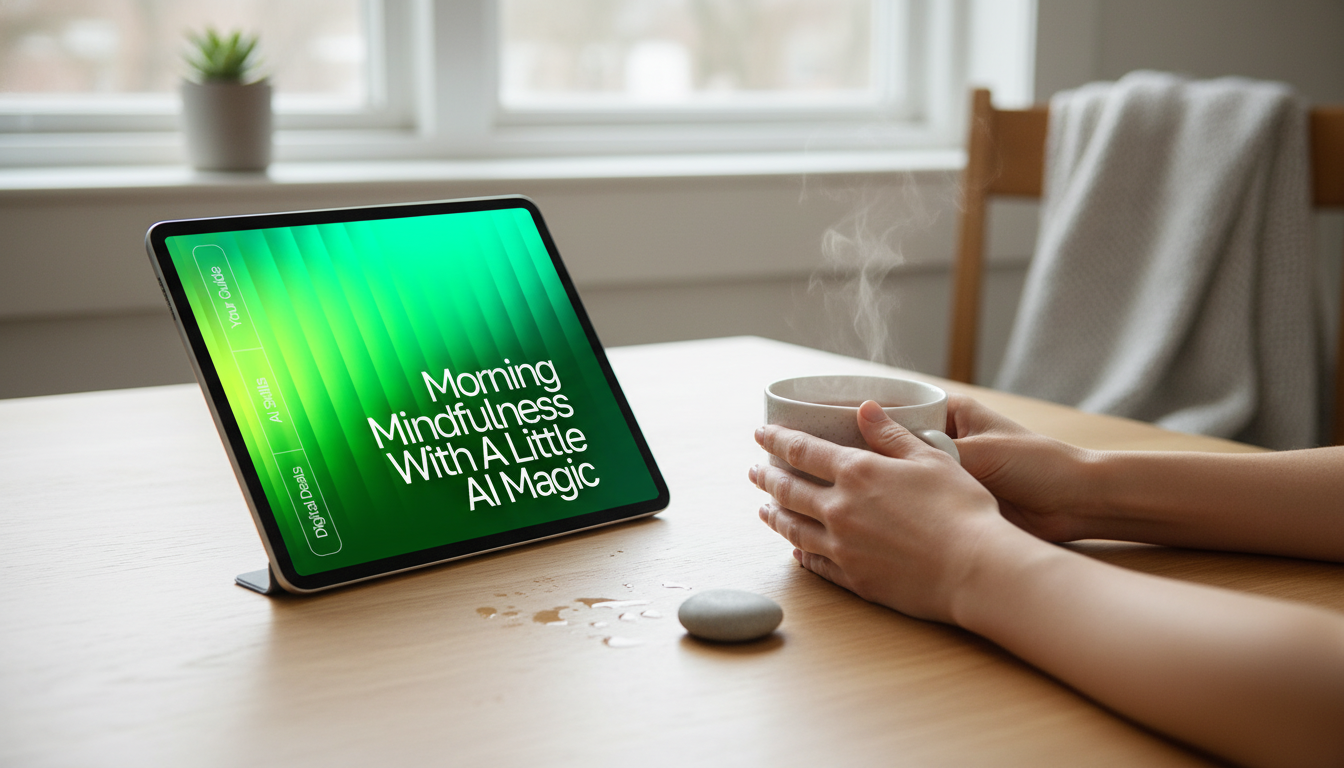
Morning Mindfulness with a Little AI Magic: A Stress-Free Start Routine for Intentional Living
A calm morning doesn’t require a perfect schedule or an hour of meditation. It requires a few repeatable choices that lower friction, reduce mental clutter, and help attention land on what matters. Below is a simple mindful morning routine—plus practical ways to use AI as gentle support for planning, reflection, and consistency—without turning your morning into more screen time.
What a mindful morning actually changes
A mindful morning is less about “doing more” and more about creating space before the day starts asking things of you. Even a few minutes can shift how you respond to stress and how you steer your attention.
- It creates a buffer between waking and reacting (notifications, chores, other people’s priorities).
- It improves decision quality by reducing early cognitive overload and rushing.
- It builds emotional steadiness through small grounding actions: breath, posture, hydration, sunlight, and intention-setting.
- It turns “motivation” into a system: the same few cues each morning make the routine easier to repeat.
- It uses AI as a light-touch helper (summaries, reminders, simple reflection) rather than a replacement for presence.
For a science-based overview of mindfulness and meditation, the National Center for Complementary and Integrative Health (NCCIH) is a solid starting point. For broader stress resources and coping strategies, the American Psychological Association (APA) has practical guidance.
A 20-minute mindful morning routine (flexible, not rigid)
Think of this as a menu, not a mandate. The goal is to keep the first moments of your day simple enough to repeat—even on imperfect mornings.
Minute 0–2: Wake gently
Sit up, place your feet on the floor, take five slow breaths, and name one feeling (no fixing, no judging). This helps your nervous system transition instead of launching into urgency.
Minute 2–5: Hydrate and open the body
Drink water first, then do a brief neck/shoulder release or a one-minute stretch sequence. Small physical cues signal safety and steadiness.
Minute 5–10: Light and alignment
Get daylight at a window or step outside if you can. Choose a simple intention word like “steady,” “patient,” or “kind and focused.” (Sleep and morning light can strongly affect mood and alertness; the CDC’s sleep health resources are helpful if mornings consistently feel rough.)
Minute 10–15: One mindful action
Pick one: a short meditation, a silent cup of tea, a body scan, or a slow walk around your home. Keep it uncomplicated—one practice, one focus.
Minute 15–20: Plan the day with boundaries
Select your top 1–3 priorities, identify one likely stress trigger, and decide on a response (pause, longer exhale, single-tasking, or a quick reset before replying).
If time is tight: the 5-minute version
Compress to the essentials: breath (1), water (1), intention (1), priority list (2). Reduce steps, not presence.
| Time | Core steps | Best for |
|---|---|---|
| 5 minutes | 5 breaths + water + one-word intention + top 1 priority | Busy mornings, consistency building |
| 10 minutes | Breath + water + light + 2-minute body scan + top 2 priorities | Reducing rush and reactivity |
| 20 minutes | Full routine + brief reflection + simple plan with boundaries | Intentional living and stress prevention |
| 30 minutes | Full routine + gentle movement + journaling | Deeper reset and emotional clarity |
Where AI fits (and where it doesn’t)
Used well, AI reduces mental load. Used loosely, it becomes a doorway to noise. The difference is duration and intention: a short, deliberate use versus open-ended scrolling.
- Best use: reduce mental load. Generate a short intention, reshape a messy to-do list into a realistic plan, or summarize yesterday’s notes into today’s focus.
- Best use: reflection support. Turn quick bullet journaling into themes (stress patterns, wins, energy dips) so your next adjustment is obvious.
- Best use: consistency. Set reminders, build a checklist, or rotate a menu of short practices to prevent decision fatigue.
- Avoid: starting the day with feeds, alerts, or open browsing. AI should be a tool you touch briefly and deliberately.
- Simple rule: AI supports the plan; the first 10 minutes still belong to the body (breath, water, light, movement).
AI-powered prompts that keep mornings calm and focused
Keep these short so they don’t pull you into “more thinking.” The win is clarity, not complexity.
Common roadblocks (and quick fixes that work)
A simple weekly reset to keep the routine sustainable
A ready-to-use guide for mindful mornings with AI support
- Morning Mindfulness with a Little AI Magic (digital download) offers a guided approach to building a calm routine with light AI support for planning and reflection.
- If your mornings involve a commute, gym time, or simply putting on the same favorite pair, the Odor-Free Shoes Checklist is a small “set it up once” habit that reduces friction later—one less annoyance competing for attention.
FAQ
How long should a mindful morning routine be?
Consistency matters more than duration. Use a 5-, 10-, or 20-minute version and keep a small non-negotiable core (breath, water, intention, one priority) so you can follow it even on busy days.
Can AI really help with mindfulness without becoming a distraction?
Yes—when it’s brief and deliberate. Use AI for quick planning or reflection, set boundaries around notifications and feeds, and keep the first minutes of your morning body-based and offline when possible.
What if anxiety hits immediately after waking?
Start with grounding: slower exhales, feet on the floor, hydration, light exposure, or a short body scan. If anxiety is severe, persistent, or interferes with daily life, consider reaching out to a qualified healthcare professional for support.











Leave a comment