Daily Movement Habits: Easy Micro-Workouts That Stick
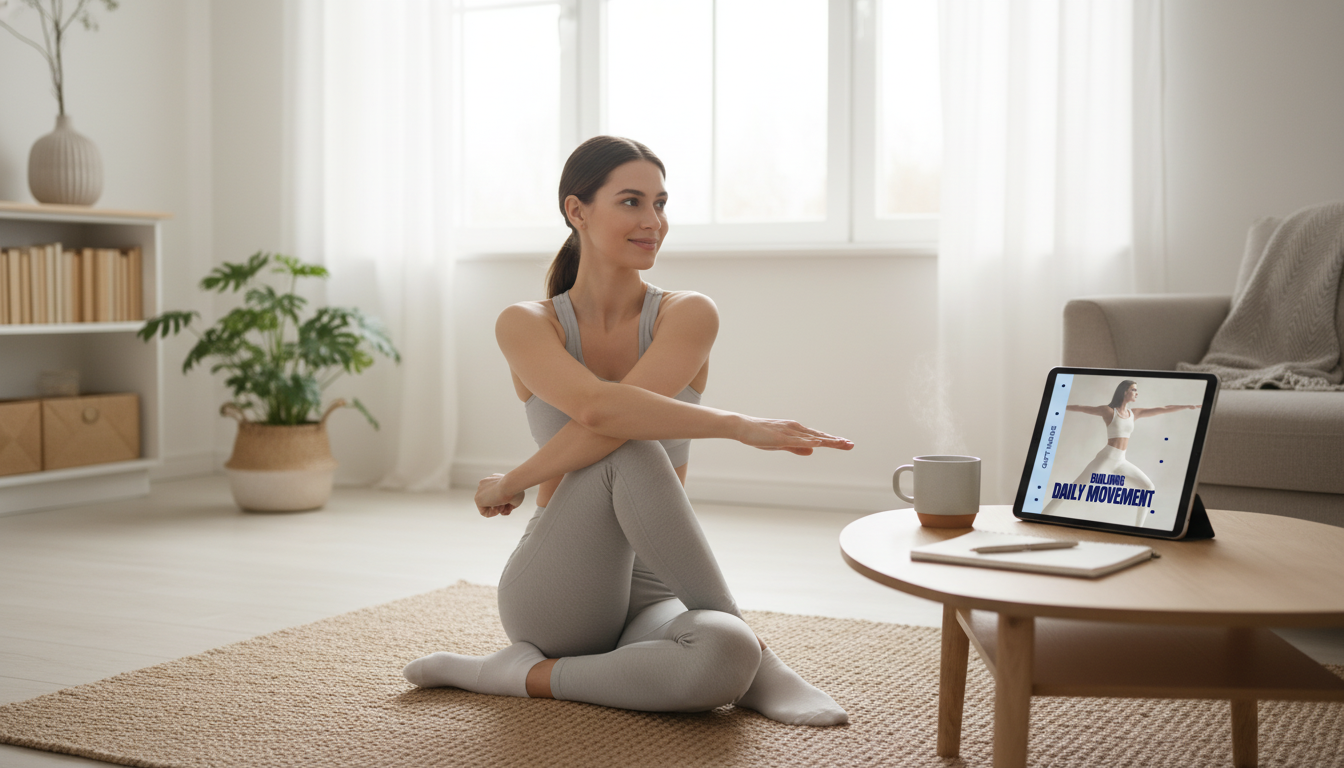
Building Daily Movement: Small, Repeatable Ways to Move More Every Day
Daily movement doesn’t require a workout plan, special equipment, or a big block of time. It’s built through small choices that fit naturally into routines—standing, walking, stretching, carrying, reaching, and changing positions more often. With a few simple movement cues throughout the day, consistent activity becomes easier to start and easier to keep. For more guidance, see Fitness program: 5 steps to get started – Mayo Clinic.
What “daily movement” means (and what it doesn’t)
Daily movement is everyday physical activity that happens in short bouts: walking to a different room, taking stairs, doing light mobility, or adding gentle strength tasks like carrying groceries. The focus is frequency and consistency over intensity—reducing long, unbroken sedentary stretches and building more total movement across the day. For further reading, see How to Start Exercising and Stick to It – HelpGuide.org.
It doesn’t require changing clothes, tracking calories, or committing to a gym routine (though it pairs nicely with formal workouts if those are already part of life). A practical target is to add multiple 1–10 minute movement moments that stack into meaningful weekly activity.
Quick daily movement ideas by time and setting
| Time available | At home | At a desk | Out and about |
|---|---|---|---|
| 1–2 minutes | Walk a lap during kettle/coffee time; 10 counter push-ups; stand and reach overhead | Stand up + 5 slow squats; shoulder rolls; walk to refill water | Park slightly farther; take one extra loop in a store aisle; stand while on a call |
| 3–5 minutes | Stairs up/down once; light tidy sprint; calf raises while brushing teeth | Walk the hallway; hip flexor stretch; 10 chair sit-to-stands | Walk around the block; carry bags with tall posture; take stairs instead of elevator |
| 8–10 minutes | Easy mobility flow; sweep/vacuum briskly; short “music clean-up” session | Walk outside; gentle stair intervals; standing meeting | Purposeful errand walk; do a second lap before heading home; choose a longer route safely |
The habits that make movement stick
The most reliable movement plan is the one that survives real life. Instead of depending on motivation, use cues that already happen: after bathroom trips, before meals, when starting a call, or right after closing a laptop.
- Keep it frictionless: pick movements that don’t require a mat, equipment, or perfect conditions.
- Protect the streak on busy days: aim for “minimum viable movement” (1–3 minutes) so the habit stays intact.
- Choose frequency over intensity: frequent low-to-moderate effort usually beats occasional all-out sessions for consistency.
- Build variety across the week: walking, mobility, light strength (carries, sit-to-stands), and balance (single-leg stands near a support).
Public health organizations emphasize the value of regular activity for overall health—see guidance from the CDC and recommendations summarized by the American Heart Association. If a full workout isn’t realistic right now, small bouts are a practical way to start building momentum.
Movement snacks: tiny options that add up
Think of these as “movement snacks”—brief, repeatable actions that fit between tasks. They’re especially useful when the day is packed and the goal is simply to move more often.
- Walking snacks: one lap inside, a quick driveway loop, or a brisk walk to the farthest restroom.
- Strength snacks: wall push-ups, countertop incline push-ups, chair sit-to-stands, or slow calf raises while waiting for food to heat.
- Mobility snacks: neck/shoulder circles, gentle spinal twists, hip hinges, ankle circles, and doorway chest openers.
- Balance snacks: stand on one leg for 10–20 seconds (use a counter for support), or do heel-to-toe walking down a hallway.
- Routine pairing: every time notifications get checked, stand up and do a 30–60 second posture reset.
Make everyday tasks more active without “exercise time”
Daily movement becomes effortless when it’s attached to things that already have to happen. The goal isn’t to turn chores into punishment—it’s to slightly “upgrade” tasks so the day includes more position changes and short bursts of movement.
A simple plan for a consistent week
Tracking progress without turning it into homework
Common barriers and quick fixes
A guided way to build the habit
If a ready-made “menu” sounds helpful, Building Daily Movement: A Simple Ebook for Daily Movement Habit Ideas, Consistent Movement Without Workouts, and Sustainable Everyday Activity is designed around low-barrier prompts for home, work, errands, and low-energy days—so it’s easier to pick something, do it briefly, and get on with your day.
Other practical digital guides available in the shop include Odor-Free Shoes Checklist | Easy Guide on How to Remove Odor from Shoes Naturally | Printable Shoe Care Checklist and The Real Cost of Pet Adoption | Ebook Guide – Pet Adoption Costs Explained for New & Future Pet Parents.
FAQ
How much daily movement is enough if there are no workouts?
Small bouts throughout the day can add up meaningfully over the week. General guidelines from major health organizations are a helpful north star, but starting with a consistent daily minimum (even 5–10 minutes total, split into short breaks) and gradually building is often the most sustainable approach.
What are good daily movement ideas for a busy desk job?
Try 1–5 minute options like standing calls, two hallway laps, 10 chair sit-to-stands, a quick hip flexor stretch, or one stair up-and-down. Use cue-based reminders (after emails, before meetings) and a simple rhythm like morning (2 minutes), mid-day (5 minutes), and mid-afternoon (2 minutes).
Does walking around the house count as movement?
Yes—walking around the house counts, especially when it breaks up long sitting stretches. To make it more purposeful, add an extra lap, include a safe stair trip, or carry a light item with tall posture.









Leave a comment