Printable Cat Grooming Checklist for Calm, Consistent Care
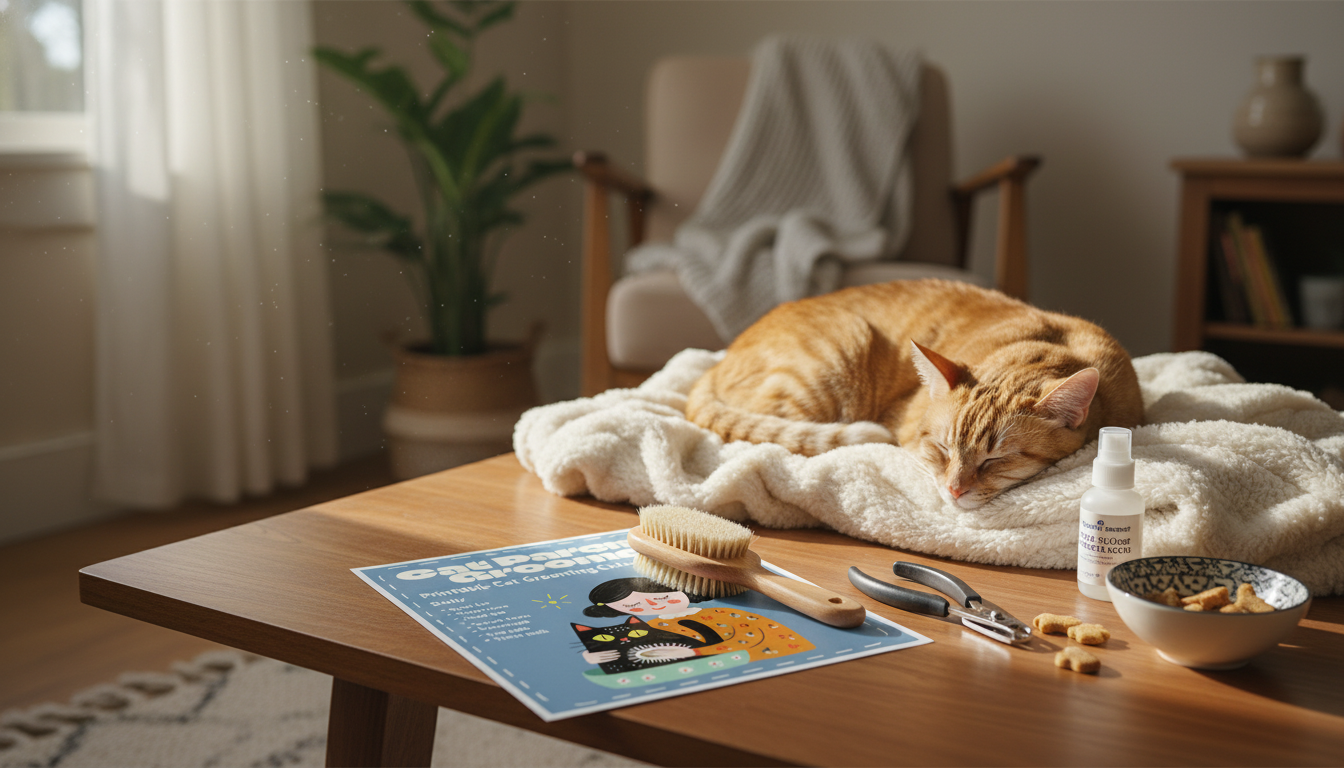
Why a grooming routine matters (even for self-groomers)
Cats do a lot of grooming on their own, but a calm, consistent routine from you fills in the gaps—and often prevents problems that only show up once they’re uncomfortable. A few minutes on a predictable schedule can mean less shedding, fewer hairballs, and fewer “surprise” issues that appear right before a vet visit.
- Reduces shedding and hairballs by removing loose fur before it’s swallowed
- Helps spot early changes: dandruff, mats, fleas/ticks, ear debris, gum redness, lumps, or tenderness
- Supports comfort and mobility by keeping nails at a safe length and preventing snagging
- Protects sensitive areas (ears, eyes, paws, chin) where buildup can lead to irritation
- Creates predictable handling practice that lowers stress during vet visits and at-home care
For general cat care guidance from veterinary sources, helpful references include the American Veterinary Medical Association (AVMA) pet owner resources and the Cornell Feline Health Center.
What’s inside the printable checklist and how to use it
A grooming plan works best when it’s easy to repeat—especially in multi-cat homes or when more than one person shares pet care. A frequency-based checklist turns grooming into small, doable steps instead of an occasional “big session” that everyone dreads.
- A frequency-based plan (daily/weekly/monthly) to avoid over-grooming or forgetting key steps
- Simple checkboxes for multi-cat households and shared caregivers
- Space for notes: coat changes, product reactions, preferred brush, and handling tolerance
- A quick “stop and reset” approach: short sessions, treat breaks, and calm handling cues
- Best results come from consistency: the checklist works as a habit tracker, not a one-time schedule
Daily: 2–5 minutes that makes everything easier
Daily grooming doesn’t have to mean daily brushing. Think of it as a quick, gentle check-in that helps you catch small issues before they become painful or time-consuming.
- Quick coat scan: run hands along back, belly, and legs to detect tangles, dandruff, or sore spots
- High-friction zones: check behind ears, armpits, inner thighs, and under the collar area for early matting
- Eye and nose wipe if needed using a damp, soft cloth; note discharge or squinting for a vet call if persistent
- Paw check: look for litter clumps, stuck debris, cracked pads, or limping
- Hairball support: add an extra short brush session during heavy shed periods
Tip for consistency: do the daily check during a naturally calm window—after a meal, post-nap, or during a favorite perch session—so grooming feels like part of the normal rhythm of the day.
Weekly: brushing, ears, teeth, and the places cats miss
Weekly grooming is where you make the biggest difference in coat quality and early detection. Keep it light, keep it brief, and focus on the areas that tend to get oily, tangled, or overlooked.
- Brushing plan by coat type: short hair often needs 1–2 sessions/week; long hair may need more frequent detangling
- Use the right tool: slicker for surface tangles, comb for checking down to the skin, deshedding tool carefully and not too often
- Ear check: look for excess wax, redness, or odor; clean only the visible outer ear with a cat-safe solution
- Dental care: aim for several short tooth-brushing sessions/week; use cat toothpaste only
- Chin and tail base check: watch for blackheads (feline acne), oiliness, or sensitivity
If tooth brushing is new, start with “micro-sessions”: touch the lip, reward; touch a tooth, reward; brush one or two teeth, reward. Gradual progress beats one long struggle.
Monthly (or as needed): nails, sanitary upkeep, and deep checks
Monthly tasks support comfort and prevent small hygiene issues from becoming chronic. Most cats tolerate these steps better when they’re broken into mini-sessions across a few days.
Grooming frequency guide by coat type and lifestyle
At-a-glance grooming schedule
| Task | Best for | Typical frequency | Notes to track |
|---|---|---|---|
| Quick coat scan + gentle brush | All cats | Daily to 2x/week | Shedding level, new tangles, sore spots |
| Thorough brushing + comb check | Long-haired, thick-coated, seniors | 2–5x/week | Mats behind ears/legs, dandruff, oiliness |
| Nail trim | All cats | Every 2–6 weeks | Snagging, clicking on floors, split nails |
| Ear check | All cats | Weekly | Odor, redness, dark debris |
| Tooth brushing | All cats (especially adults/seniors) | 3–7x/week | Gum redness, bad breath, tartar |
Making grooming low-stress: handling, timing, and rewards
For additional grooming and wellness basics, VCA Animal Hospitals’ cat care resources can be a useful starting point alongside your veterinarian’s advice.
When to pause at-home grooming and call a professional
Printable download: The Smart Cat Parent’s Groomer
Get The Smart Cat Parent’s Groomer printable checklist (digital download)
If you’re also budgeting for a new pet or planning ongoing care costs, The Real Cost of Pet Adoption | Ebook Guide – Pet Adoption Costs Explained for New & Future Pet Parents can help map out the full picture beyond day-one expenses.
FAQ
How often should a cat be groomed?
Most cats benefit from a daily 2–5 minute check (coat, eyes, paws), weekly brushing/ear checks, and monthly nail trims. Short-haired cats often do well with 1–2 brushing sessions per week, while long-haired cats typically need more frequent detangling—especially during shedding season or as they age.
What’s the safest way to handle mats in a cat’s fur?
Avoid scissors near the skin—cat skin is thin and can be cut easily, especially when a mat is tight. For early tangles, use gentle finger-separating and a comb in short passes; for tight or skin-level mats, a professional groomer or vet is the safest option.
Do indoor cats need flea and tick checks?
Yes. Fleas and ticks can hitchhike indoors on people, other pets, or even through screens and doorways. Periodic checks plus vet-recommended prevention (based on your household’s risk) helps avoid infestations and skin irritation.












Leave a comment