Small-Space Dumbbell Strength Plan: 3 Days, Full Body
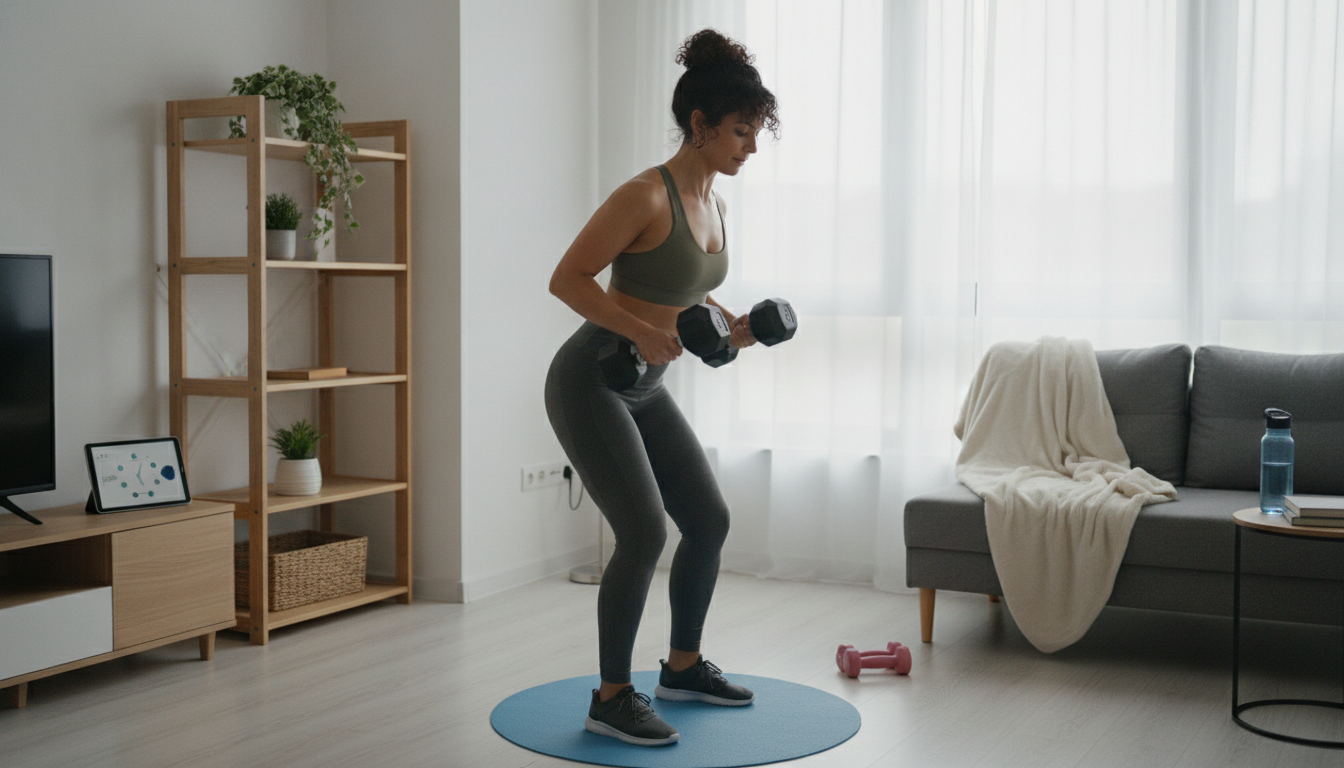
Strength at Home with Dumbbells: A Small-Space Plan for Full-Body Results
Building strength at home doesn’t require a big gym footprint—just a pair of dumbbells, a clear patch of floor, and a plan that balances push, pull, squat, hinge, and core work. Below is a small-space approach that supports beginners through intermediate lifters with simple progressions, time-efficient sessions, and practical setup tips.
What makes dumbbells ideal for small-space strength training
- Compact setup: One mat-sized area plus a stable surface (bench, sturdy chair, or couch edge) covers most movements.
- Joint-friendly loading: Neutral grips and independent arms can feel smoother on shoulders and elbows than fixed bars for many lifters.
- Easy progression: You can get stronger through reps, tempo, pauses, range of motion, and unilateral work—not only heavier weights.
- Balanced development: Single-arm/single-leg work helps close side-to-side gaps without adding equipment.
- Quiet options: Controlled eccentrics, floor pressing, and static holds keep noise low for apartment training.
Set up a safe training space in under two minutes
- Clear a 6 ft x 6 ft area with overhead clearance for presses and stable, no-slip footing for lunges.
- Store dumbbells so they can’t roll (a bin, a corner, or a towel “cradle” on the floor works well).
- Use a sturdy chair for supported rows and split squats; test stability before you load it.
- Warm up for 5–7 minutes: brisk marching, hip hinges, arm circles, bodyweight squats, then 1–2 light rehearsal sets of your first lift.
- Simple safety rule: end most sets with 1–3 good reps still “in the tank” so form stays consistent.
The movement patterns that cover the whole body
Rather than chasing a long list of exercises, aim to hit these patterns each week:
- Squat pattern: goblet squat, front squat (two dumbbells), split squat.
- Hinge pattern: Romanian deadlift (RDL), single-leg RDL, glute bridge/hip thrust (dumbbell on hips).
- Push pattern: floor press, overhead press, push-up (with or without dumbbells as handles).
- Pull pattern: one-arm supported row, bent-over row, reverse fly (light).
- Carry + core: suitcase carry, farmer carry, dead bug, side plank, loaded march.
If you’d like a structured plan you can follow without overthinking exercise selection, Strength at Home with Dumbbells: Digital Fitness Guide for Small Spaces is designed around these movement patterns and easy progressions.
A 3-day small-space dumbbell week (repeat for 4–8 weeks)
- Schedule: Train 3 nonconsecutive days (Mon/Wed/Fri or Tue/Thu/Sat) for recovery and steady progress.
- Timing: 35–45 minutes including warm-up; shorten rests to fit 25–30 minutes when needed.
- Load guidance: Use weights that allow clean reps. Add 1–2 reps per set before increasing load.
- Rest: 60–120 seconds for main lifts; 30–60 seconds for accessories and core.
- Finisher option (5 minutes): carries, light complexes, or step-ups if energy is good.
3-Day Dumbbell Routine for Small Spaces (Example Week)
| Day | Main Lifts (3–4 sets) | Accessory (2–3 sets) | Core/Carry (2–3 sets) |
|---|---|---|---|
| Day 1 (Squat + Push) | Goblet squat 6–10 reps; Dumbbell floor press 6–12 reps | Split squat 8–12/side; Overhead press 6–10 reps | Suitcase carry 20–40 sec/side; Dead bug 8–12/side |
| Day 2 (Hinge + Pull) | Romanian deadlift 6–10 reps; One-arm supported row 8–12/side | Glute bridge 10–15 reps; Reverse fly 10–15 reps (light) | Side plank 20–45 sec/side; Farmer carry 20–40 sec |
| Day 3 (Full-Body + Conditioning) | Front squat (two DBs) 6–10 reps; Push-up or incline push-up 8–15 reps | Single-leg RDL 8–12/side; Bent-over row 8–12 reps | Loaded march 30–60 sec; Slow suitcase hold 20–30 sec/side |
Progress without needing heavier dumbbells
Form cues that protect joints and make reps count
Recovery basics that make home training sustainable
- Protein and calories: Consistent intake supports strength and muscle; distribute protein across meals.
- Sleep: Keep a steady sleep schedule—sleep loss quickly dents performance and recovery (see NIH guidance on healthy sleep).
- Daily movement: Light walking and a few mobility drills reduce stiffness without “stealing” recovery.
- Deload option: Every 4–6 weeks, reduce sets by ~30–40% (or keep loads the same and stop farther from failure).
- Stress management: Lower stress supports training consistency, appetite regulation, and sleep quality. If you want a step-by-step approach, Finding Your Calm Again – Stress Management Guide can help you build daily habits that complement your workouts.
For general adult activity recommendations that pair well with strength training, review the CDC Physical Activity Guidelines for Americans.
Digital guide option for structured routines in tight spaces
If your goal is to follow a clear plan for 4–8 weeks (and then repeat with simple progressions), Strength at Home with Dumbbells: Digital Fitness Guide for Small Spaces is built for small living rooms, apartments, and “one-clear-corner” setups.
FAQ
What dumbbell weight should a beginner start with at home?
Many beginners do well with 5–15 lb dumbbells for upper-body moves and a bit heavier for lower-body exercises, but the best choice is the weight that lets you complete about 8–12 controlled reps while keeping 1–3 reps in reserve. If form breaks early, go lighter; if you could do many more reps, go heavier or slow the tempo.
How many days per week are enough to get stronger with dumbbells?
Two to four days per week can work, and three full-body sessions is a strong sweet spot for small-space training. Consistent progressive overload and recovery matter more than training every day.
Can strength training work in an apartment without jumping or loud equipment?
Yes—focus on floor presses, slow-tempo squats and RDLs, carries, and isometrics with controlled lowering. Using a mat and placing weights down gently keeps noise low while still providing effective training.











Leave a comment