Self-Discipline App Checklist for Focus, Habits & Proof

The Self-Discipline App Checklist: A Simple System for Focus, Habits, and Accountability
Self-discipline gets easier when tools are chosen and set up with intention. A short checklist can prevent app overload, clarify what needs to be tracked, and build accountability that lasts. Instead of collecting “one more app,” build a lightweight system that protects attention, makes progress visible, and creates follow-through you can verify.
Self-control is often defined as the ability to regulate impulses and actions to meet longer-term goals—something that improves when the environment supports better choices rather than relying on willpower alone. For a clear definition, see the APA Dictionary of Psychology.
Start with a clear outcome (not a bigger app stack)
- Choose one primary outcome for the next 14–30 days: deeper focus, consistent habits, or stronger accountability.
- List the top 3 behaviors that most affect that outcome (example: start work on time, block distractions, end-of-day review).
- Decide what “success” looks like in a measurable way (minutes focused, habit streaks, tasks completed, check-ins done).
- Set a limit on tools: one focus tool, one habit tracker, one accountability method (a person or a group), plus a notes app if needed.
A tight tool limit does something important: it forces clarity. If the system is simple enough to run on a messy day, it’s the right size.
Checklist: features that actually support discipline
- Friction reducers: quick add, templates, widgets, and minimal taps to log progress.
- Friction creators (useful): app/site blocking, scheduled lockouts, and “hard starts” for deep work sessions.
- Feedback loops: clear progress views, weekly summaries, and simple streak or consistency tracking.
- Reminders that respect attention: time-window reminders, snooze limits, and escalation only when needed.
- Accountability options: shared goals, check-in prompts, commitment contracts, or exportable reports.
| What to check | Why it matters | Green flag |
|---|---|---|
| Setup time under 15 minutes | Lower barrier to starting and sticking with it | Works well out of the box with templates |
| One-screen daily view | Reduces decision fatigue | Today’s tasks/habits visible immediately |
| Progress review built-in | Reinforces consistency | Weekly report or dashboard |
| Distraction controls | Protects focus during high-value work | Scheduled blocks and whitelists |
| Easy exports/sharing | Makes accountability real | Shareable summary or CSV/PDF export |
| Cross-device support | Prevents “it’s on my other device” lapses | Syncs across phone/desktop |
A practical setup that takes one hour
- Create three lists: Focus Sessions, Daily Habits, Weekly Review.
- Pick 1–2 focus blocks per day (25–90 minutes) and schedule them before adding more tasks.
- Add 3 daily habits max; attach each to an existing cue (after coffee, after lunch, before shutdown).
- Define one accountability checkpoint: end-of-day message, screenshot of completion, or weekly recap.
- Remove duplicate trackers; one source of truth per behavior prevents drift.
If sleep or energy is the bottleneck, the “discipline system” may need a recovery upgrade. The NHS sleep tips are a solid, practical baseline for improving consistency and focus.
Focus: protect the start, not just the time
Most focus plans fail in the first 60 seconds—when resistance spikes and distractions feel easiest. The goal is to make starting automatic.
- Use a “start ritual” that lasts 60–120 seconds: open the project, set a timer, clear the desk, begin.
- Block the top 3 distraction triggers (social apps, news, entertainment) during focus windows.
- Keep a capture list for distracting thoughts so they don’t become tab-switching.
- End each session with a “next action” note to reduce resistance later.
Small physical routines can amplify mental control. Regular movement supports attention and mood; see the CDC’s overview of physical activity benefits for a quick evidence-based refresher.
Habits: consistency beats intensity
- Track the smallest version of the habit that still counts (2 minutes of reading, 5 pushups, one page).
- Use flexible targets (e.g., 4 days/week) when daily streaks create all-or-nothing failure.
- Tie habit tracking to a daily anchor: morning routine, lunch break, or shutdown routine.
- Review habit data weekly to adjust difficulty rather than quitting.
A useful rule: if you can’t do it on a bad day, it’s not the “minimum.” Reduce the minimum until it becomes nearly inevitable, then scale slowly.
Accountability: make it specific and easy to verify
Avoid the common traps that sabotage follow-through
Use a ready-made checklist to simplify selection and setup
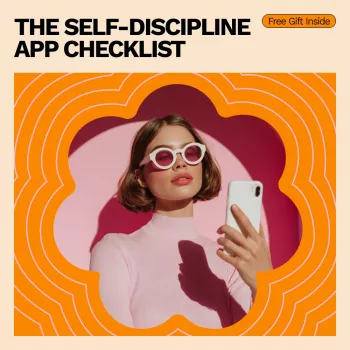
A structured checklist reduces guesswork when comparing tools for focus, habits, and accountability—and it keeps the system small enough to run daily. If you want a simple way to score apps, set up a minimal workflow, and keep a weekly review from turning into a reinvention session, use The Self-Discipline App Checklist.
For people who like checklists that extend beyond productivity into everyday routines, Odor-Free Shoes Checklist is another quick, structured guide that can pair well with a “small daily systems” approach—less mental clutter, fewer skipped basics.
FAQ
How many productivity or self-discipline apps should be used at once?
A small stack works best: 1 focus tool, 1 habit tracker, and 1 accountability method (a person or group), with notes only if needed. Fewer tools reduce decision fatigue and make it easier to stay consistent; commit to the same setup for 30 days before changing anything.
What should be tracked daily to build self-discipline?
Track one priority outcome, minutes of focused work (or number of focus sessions), 1–3 core habits, and a simple end-of-day check-in. Keeping the metrics lightweight makes it far more likely you’ll log them even on busy days.
How can accountability be added without feeling pressured?
Use gentle, supportive verification: a weekly recap message, a quick buddy check-in, or a shared progress snapshot. Set expectations upfront (what counts as “done” and when you report) and keep the tone focused on learning and consistency rather than punishment.









Leave a comment