Toy Rotation Checklist: Easy Plan for Calmer Pets
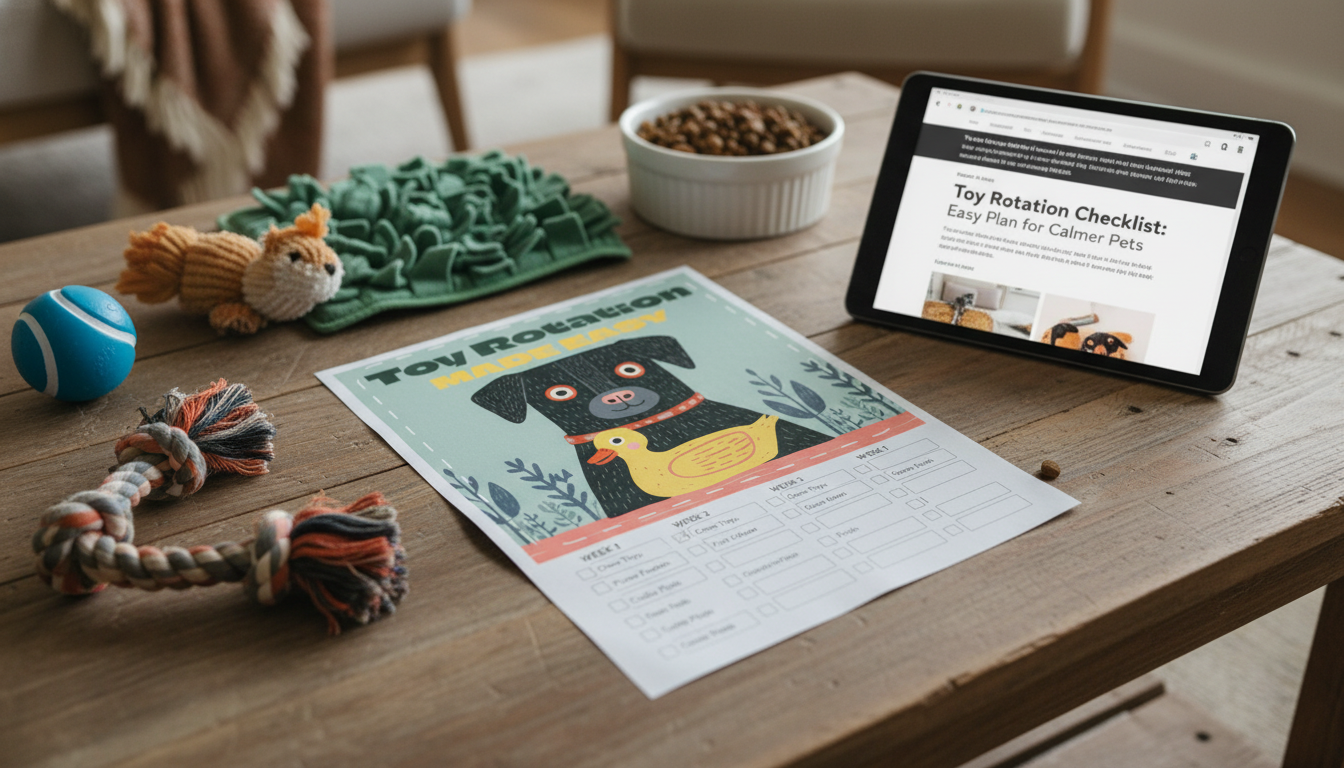
Toy Rotation Made Easy: A Printable Playtime Checklist for Happier, Calmer Pets
Rotating toys keeps playtime fresh without constantly buying new items. A simple system—sort, schedule, and swap—can reduce boredom, encourage healthy problem-solving, and make daily enrichment feel manageable. This guide walks through an easy toy-rotation setup and shows how to use a printable checklist to stay consistent.
Why toy rotation works (and what it prevents)
Most pets don’t need a mountain of toys to stay entertained—they need the right kind of variety at the right time. Rotation works because it protects novelty and helps you match play to mood.
- Novelty boosts engagement: a toy that disappears for a week often feels “new” again when it returns.
- Fewer boredom behaviors: a predictable outlet for play can reduce chewing furniture, nuisance barking, pacing, or constant pestering for attention.
- More intentional enrichment: sniffing, shredding, chasing, licking, and problem-solving can be planned rather than random.
- Calmer downtime: mixing active play with soothing activities (lick mats, chew items, puzzle feeders) supports better recovery after excitement.
- Less clutter: limiting what’s available makes cleanup easier and prevents “toy overwhelm” in small spaces.
For more enrichment and behavior basics, you can also review pet care guidance from the American Veterinary Medical Association (AVMA) and practical enrichment ideas from the RSPCA.
Set up a rotation system in 20 minutes
This setup is designed to be “good enough” on busy weeks while still keeping playtime interesting.
- Gather and sort: pull every toy into one spot; group by type (chew, tug, fetch, puzzle, comfort, cat wand, kicker, etc.).
- Quick safety check: discard torn soft toys with exposed stuffing, cracked hard toys, frayed ropes, or anything small enough to swallow.
- Choose 6–10 “active” toys to keep out: go smaller for tight spaces or multi-pet homes to reduce conflict and guarding.
- Create 2–4 bins: “Out Now,” “Next Week,” “Wash/Repair,” and “Special Supervision” (higher-value items or those that need monitoring).
- Pick a swap rhythm: every 3–7 days for high-energy pets; every 1–2 weeks for pets that prefer routine.
- Label bins by day or week: removing daily decisions makes it easier to stick with the habit.
If you want a ready-made system for tracking, the Toy Rotation Made Easy printable pet playtime checklist (digital download) is built for quick swaps, simple notes, and cleaning reminders.
Use a printable playtime checklist to stay consistent
A rotation plan only works when it’s repeatable. A checklist turns “I should rotate toys” into a quick routine you can complete in minutes.
- Track what’s out: list the current “available” toys so nothing gets lost under furniture or forgotten in a closet.
- Log your pet’s reactions: note what got ignored, what caused over-arousal, and what held focus for 5–10+ minutes.
- Balance the week: aim for a mix of physical play (tug/fetch), brain work (puzzles), and calming enrichment (chews/licking).
- Rotate by need: add more calming options during stressful periods (storms, visitors) and more active options on low-walk days.
- Make cleaning automatic: add a checkbox for washing plush toys, wiping rubber toys, and sanitizing food-dispensing items.
Over time, your notes become a “what actually works” list—especially helpful when deciding whether to replace a toy or skip it.
A simple 2-week toy rotation example (adjust for dogs, cats, and small pets)
Keep novelty high by repeating categories, not always the exact same items. That way your pet recognizes the routine, but the toys still feel fresh.
- Plan for supervision: reserve string/feathers, tight-tolerance chews, or tiny parts for monitored sessions only.
- Use micro-sessions: 3–5 minute play bursts often fit better into real life than one long session.
- Pair rotation with routines: swap toys on trash day, laundry day, or the first day of the workweek.
| Day/Week | Active Toys Out (Examples) | Enrichment Focus | Notes to Track |
|---|---|---|---|
| Week 1 (Mon–Wed) | Tug toy, ball, puzzle feeder, soft comfort toy | Engagement + problem-solving | Did the puzzle hold attention? Any possessiveness? |
| Week 1 (Thu–Sun) | Squeaky plush, chew item, snuffle mat, training tug | Calm chewing + sniffing | Chew duration; stress signals; toy durability |
| Week 2 (Mon–Wed) | Different ball, flirt pole/wand (supervised), treat-dispensing toy, kicker toy | Chase + focus | Over-arousal? Recovery time after play? |
| Week 2 (Thu–Sun) | New plush (or rotated), lick mat, puzzle level-up, calm fetch toy | Settle + independence | Can pet self-entertain while you work? |
Rotation ideas by play style (quick picks when you’re short on time)
If you’re a new or future pet parent planning a realistic budget for enrichment, vet care, and supplies, The Real Cost of Pet Adoption (ebook guide) can help map out typical expenses so “fun stuff” doesn’t crowd out necessities.
Toy organization that actually lasts (even in small spaces)
Digital download checklist: what to look for and how to use it week after week
For additional pet behavior and care guidance, the ASPCA offers practical references you can use alongside your home routine.
FAQ
How often should toys be rotated for pets?
A practical range is every 3–7 days for high-energy pets and every 1–2 weeks for pets that prefer routine. Track engagement and adjust—if interest drops fast, swap sooner; if the household gets stressed by change, slow the pace.
How many toys should be out at once?
About 6–10 is a manageable sweet spot, with fewer in small spaces or multi-pet households to reduce clutter and resource guarding. Aim for a balanced mix (active play, brain games, and calming options) instead of many similar toys.
What should be removed from rotation for safety?
Remove frayed ropes, cracked hard toys, loose squeakers, exposed stuffing, and any small parts that could be swallowed. Keep high-risk items (strings/feathers, intense chews, or easily shredded pieces) for supervised sessions and re-check toys routinely.











Leave a comment