Drawer Zen: 15-Minute Reset for Clutter-Free Drawers
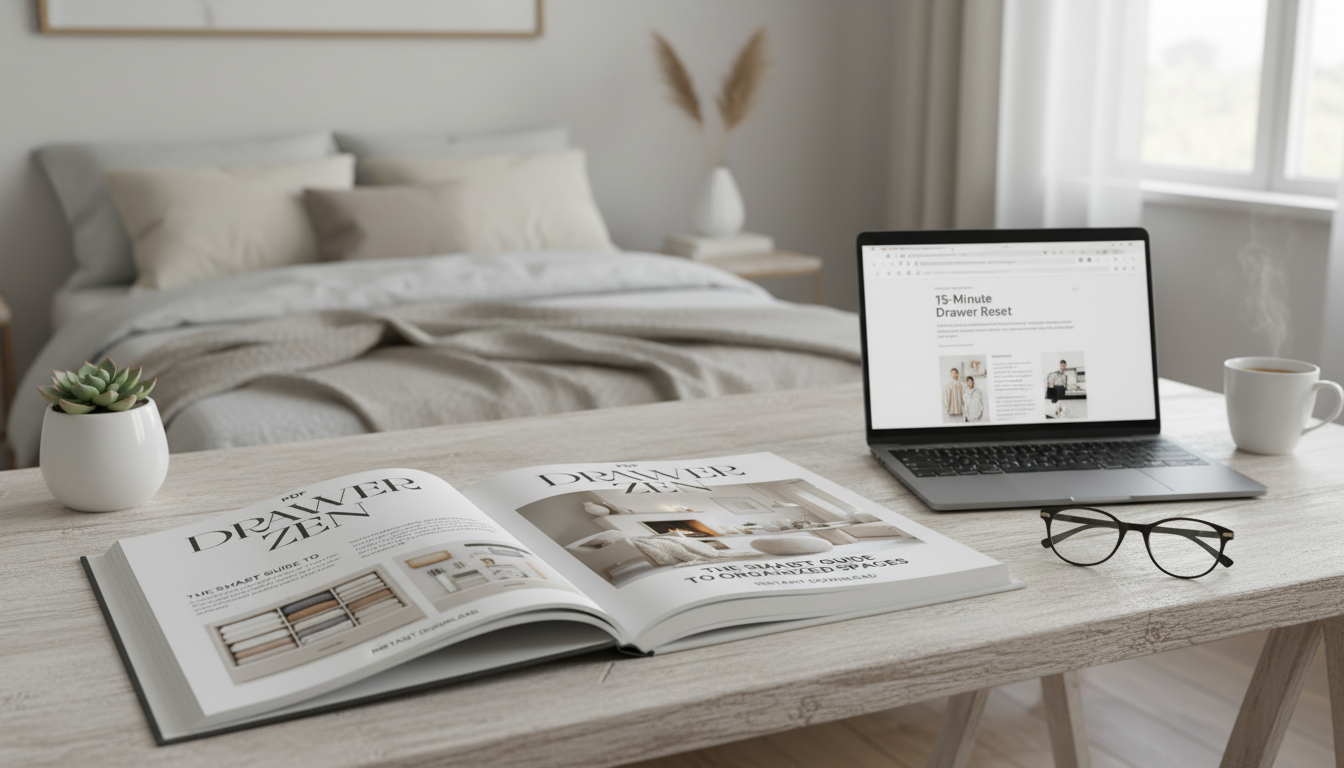
Drawer Zen: A Practical System for Calm, Clutter-Free Drawers
Messy drawers create daily friction: lost items, duplicate purchases, and a constant sense of visual noise. Drawer Zen is a digital eBook designed to turn drawer organization into a simple, repeatable routine—so every drawer has a purpose, everything has a home, and resetting stays easy even during busy weeks.
What “Drawer Zen” Means in Everyday Life
A drawer is “zen” when it supports your routines instead of slowing them down. The goal isn’t a showroom look—it’s a drawer that works without constant re-organizing.
- A drawer is “zen” when it is easy to open, easy to scan, and easy to reset in under 60 seconds.
- Organization is treated as a system (categories, limits, and placement), not a one-time makeover.
- Focus on reducing decision fatigue: fewer “where does this go?” moments and fewer piles on counters.
- A calm drawer supports calm routines—mornings move faster and cleaning becomes simpler.
The 15-Minute Drawer Reset Method
This method is designed for real life: quick wins, clear limits, and a finish line you can actually reach on a weekday.
- Step 1: Empty the drawer fully and wipe it down; starting with a clean base prevents “organizing around grime.”
- Step 2: Make fast categories on the counter: keep, relocate, donate/recycle, trash.
- Step 3: Set a container limit per category (the space defines the quantity, not the other way around).
- Step 4: Assign “zones” inside the drawer: daily-use items front, occasional-use back.
- Step 5: Label invisibly (simple dividers, small cards, or consistent grouping) so the system stays self-explanatory.
- Step 6: Do a 30-second reset rule: if it takes longer, the category is too broad or the drawer is overfilled.
15-Minute Drawer Reset Cheat Sheet
| Minute | Action | Outcome |
|---|---|---|
| 0–2 | Empty drawer + quick wipe | Clean slate and clear visibility |
| 2–6 | Sort into 4 piles (keep/relocate/donate/trash) | Clutter exits the drawer immediately |
| 6–10 | Group keep-items into categories | Clear boundaries for what belongs |
| 10–13 | Place dividers/containers and assign zones | Everything gets a stable home |
| 13–15 | Final edit: remove extras and test open/close | Drawer closes easily and resets fast |
How to Decide What Belongs in a Drawer (and What Doesn’t)
The fastest way to keep drawers tidy is to give each one a single job. When a drawer has a role, it’s easier to notice when something doesn’t belong.
- Match the drawer to a single role: “morning routine,” “meal prep tools,” “desk essentials,” or “first-aid.”
- Avoid mixed-purpose drawers unless the items are used together in one routine.
- Keep only duplicates that are truly used (example: one backup pen cup-worth, not a full drawer).
- Remove “maybe” items by giving them a temporary holding zone outside the drawer for 7–14 days; if not used, let them go.
If you’re stuck, try this quick filter: “Would I walk to this drawer for this item on purpose?” If not, it’s likely a relocate item—or it belongs in a different storage type (cabinet, bin, closet, or backstock area).
Room-by-Room Drawer Plans
Different rooms create different clutter patterns. Use these simple zone ideas as a starting point, then adjust based on how your household actually reaches for items.
- Kitchen: create micro-zones for cooking tools, measuring, wraps/bags, and snack/lunch supplies; keep the most-used tools nearest the prep area.
- Bedroom: separate “get ready” from “repair/extra” (socks/underwear front; sewing kit and spare buttons back).
- Bathroom: keep categories narrow—daily care, hair tools, skin, meds; prevent product overflow by using a strict tray limit.
- Home office: build a “one-pass” drawer—writing tools, chargers, sticky notes, and a small mail-to-process slot.
Safety note: for drawers that include medications, tools, or sharp objects, placement matters. Keeping risky items in consistent, secure locations supports safer habits—especially for kids and visitors. For broader home safety ideas, see the National Institute on Aging’s home safety tips.
Dividers, Inserts, and No-Buy Alternatives
Common Drawer Problems and Fast Fixes
Cleaning also supports the system: when drawers are wiped regularly, it’s easier to notice leaks, crumbs, or product buildup before they spread. For practical guidance on cleaning and disinfecting, the CDC’s cleaning and disinfecting recommendations are a helpful reference.
A Weekly Maintenance Rhythm That Sticks
Digital Download eBook: What Drawer Zen Helps Put Into Practice
If you want a clear framework you can repeat across the kitchen, bathroom, bedroom, and office, the Drawer Zen: The Smart Guide to Organized Spaces (digital download) is built for quick reference while you reset.
For a related “small system that saves time,” pair tidy entryway or closet zones with the Odor-Free Shoes Checklist to keep shoe care supplies from turning into a random pile near the door.
FAQ
How long does it take to organize a drawer from start to finish?
A small drawer can often be reset in 10–15 minutes, a medium drawer in 15–30 minutes, and a true “junk drawer” may take 30–45 minutes depending on sorting decisions. The goal is a functional baseline you can maintain, not a perfect one-time makeover.
What if a drawer is too deep or too large and everything gets lost?
Create front/back zones and use shallow trays or small boxes like “sub-drawers” so items don’t stack into a hidden pile. Keep daily-use items at the front and set clear limits so the back zone doesn’t become an overflow dump.
Do drawer organizers have to be expensive to work?
No—many drawers improve dramatically with no-buy dividers like small boxes and sturdy packaging, as long as categories are clear and easy to reset. Measure first, and only upgrade after the categories are proven to stay stable and visible.










Leave a comment