Pet Chores by Age: Printable Checklist for Kids & Families
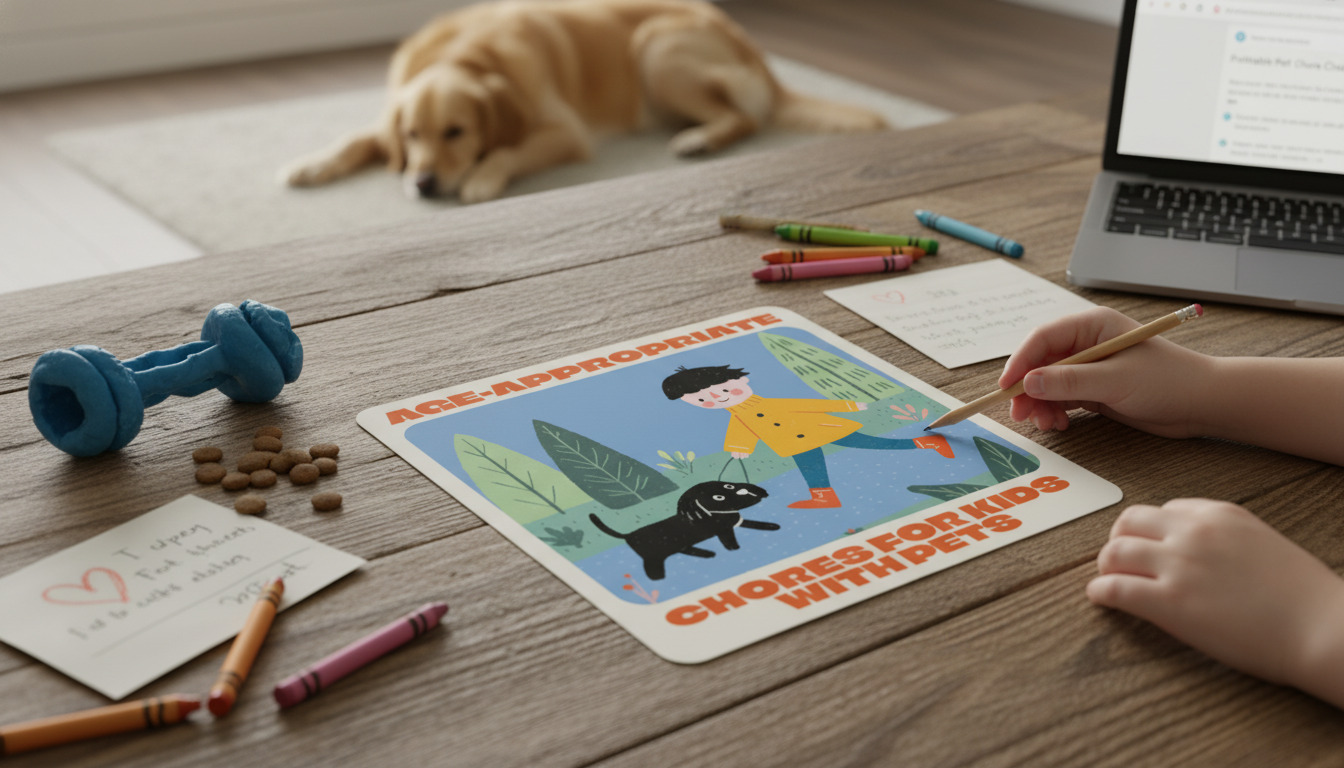
Age-Appropriate Pet Chores for Kids: A Printable Checklist to Build Responsibility and Empathy
Kids can learn real-life responsibility through pet care when tasks match their age, attention span, and safety needs. The goal isn’t to “make kids do more”—it’s to build a simple rhythm the whole family can stick to, while protecting pets from accidental mishandling. Below are realistic pet chores by age, ways to prevent power struggles, and a printable checklist structure that keeps expectations consistent across caregivers.
Why pet chores work better than generic chores
Pet care chores tend to “click” for kids faster than many household tasks because the results are immediate and meaningful. A clean bowl, a refilled water dish, or a calmer pet after gentle play helps kids connect effort to outcomes. Because pet needs repeat daily, repetition builds habits—doing a few small actions every day is more effective than a long list done once in a while.
Safety rules to set before assigning any pet chore
- Adult supervision is required for anything involving chemicals, medications, sharp tools, heavy bags, or hot water.
- Handwashing after touching pets, food, litter, cages, or outdoor waste; keep food-prep areas separate from pet supplies. The CDC’s Healthy Pets, Healthy People guidance is a solid reference for family hygiene habits.
- No unsupervised handling of infants/toddlers with animals; teach “gentle touch, one hand on body, no hugging tight.”
- Define “pet says no” signals: backing away, lip licking, yawning, tail tucked, stiff body, hiding. When these appear, the chore becomes giving space.
- Kids never change diet amounts without a parent-approved scoop/cup and a posted feeding plan.
For dog households, reinforce bite-prevention basics (calm approach, no grabbing, no bothering a resting pet). The American Veterinary Medical Association’s dog bite prevention page is helpful for setting family rules in plain language.
Age-appropriate pet chores by stage (with examples for common pets)
- Ages 2–4: Helper tasks with an adult (carry an empty bowl, press the timer button, toss approved treats into a cup, help fill water with a small pitcher, sit quietly during brushing).
- Ages 5–7: Short independent tasks with a check-in (refresh water, set out pre-portioned food, place an enrichment toy, close latched doors, gentle brushing on calm pets).
- Ages 8–10: Routine owners for 1–2 daily tasks (feed with a measured scoop, sweep around the kibble area, supervised poop-scoop with gloves, refill a litter-topper box under supervision).
- Ages 11–13: Own a daily routine plus part of weekly care (track feeding times, rotate toys, help with bathing prep, check supply levels, update the checklist).
- Ages 14+: Lead caregiver tasks with adult oversight for health decisions (reminders for preventatives, help prepare for vet visits, manage weekly deep-clean steps, train simple cues using positive methods).
- Adjust by temperament and species: Rabbits/guinea pigs need calm, quiet handling; fish need measured feeding and water-quality awareness; reptiles/exotics require strict hygiene and habitat parameters. For more guidance on safer home habits, see American Humane’s kid-and-pet safety tips.
Chore ideas by age and pet type
| Age | Dog | Cat | Small pets (rabbit/guinea pig/hamster) | Fish/Reptiles | Adult role |
|---|---|---|---|---|---|
| 2–4 | Carry leash to the door; hand over treats for training | Help place a toy near the cat; watch from a calm distance | Bring fresh hay bag to parent; help drop veggies into bowl | Tap the light timer; help pour pre-measured food with adult | Model gentle touch; handle all scooping/cleaning |
| 5–7 | Refill water bowl; match brush to chart (soft brush only) | Refresh water; help shake litter mat outside (with adult) | Refill water bottle; add hay to rack | Feed with pre-measured container; check temperature gauge | Prep supplies; quick visual check for safety |
| 8–10 | Measure food with labeled scoop; wipe feeding area | Portion food; brush 3–5 minutes; play wand-toy session | Spot-clean bedding with adult; wash bowl in sink | Log feeding; wipe exterior glass; help rinse filter sponge (adult) | Verify measurements; supervise waste disposal |
| 11–13 | Pack walking kit; track walks on checklist | Clean water fountain parts with adult; rotate toys weekly | Full cage refresh with adult supervision; restock hay/pellets | Test strips with adult; record results; top off water (adult) | Teach correct technique; confirm habitat parameters |
| 14+ | Lead training plan; manage weekly bath/ear-check routine (as appropriate) | Manage weekly deep clean schedule; nail-trim assistance | Plan enrichment; monitor for health changes; supply inventory | Coordinate maintenance schedule; monitor heater/UVB setup (reptiles) | Approve health steps; handle meds/vet communication |
Turning chores into a routine kids will actually do
Printable checklist setup for families (daily, weekly, monthly)
If you want a ready-to-print layout with kid-friendly task categories, initials, and notes, use this internal download: Printable pet care checklist download.
Teaching empathy: reading pet body language during chores
Common problems and simple fixes
Helpful family guides (internal)
- Guide to pet adoption costs
- Child safety with exotic pets
- The Age-Appropriate Chores for Kids with Pets (Printable Checklist)
FAQ
What pet chores are safe for a 5-year-old?
Stick to short, low-risk jobs like refreshing water, placing pre-portioned food, gentle supervised brushing, and simple enrichment. Avoid litter or waste handling, medications, and any unsupervised walking or animal lifting.
How do kids share pet chores without arguing?
Give each child a stable role (food/water vs. play/enrichment vs. checklist captain) and assign a backup person for busy days. Keep the schedule predictable and do a quick weekly review to adjust fairly.
How can a checklist teach empathy, not just responsibility?
Add a daily “pet check-in” line for mood, appetite, and stress signals, and teach kids to pause or stop chores when the pet seems uncomfortable. Praise gentle, choice-based interactions so kids learn that care includes respect.









Leave a comment