Your Puppy’s First Week: Routine, Potty, Sleep & Biting
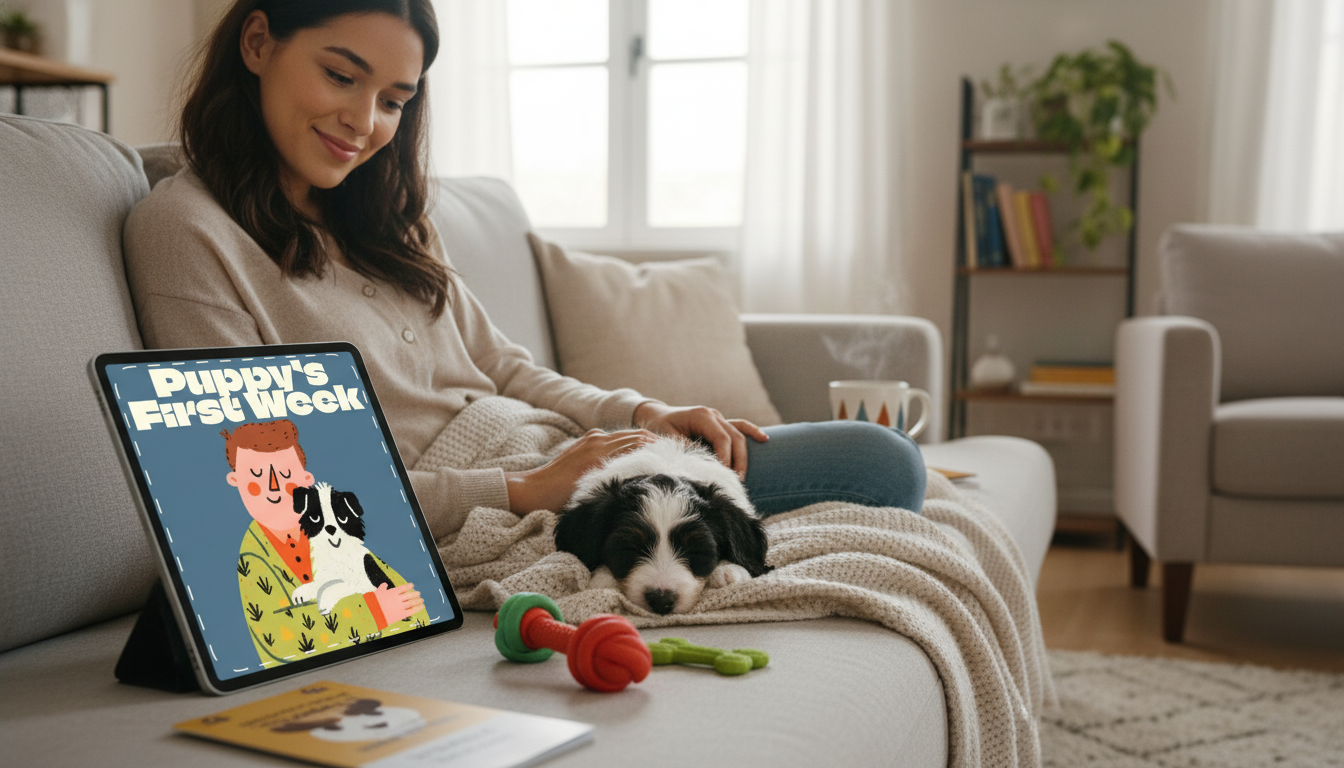
Puppy’s First Week: A Happy Start
The first seven days with a new puppy set the tone for house training, sleep, confidence, and bonding. A simple plan—focused on calm transitions, predictable routines, gentle training, and smart safety—helps prevent common week-one problems like accidents, crying at night, nipping, and overwhelm.
Before the puppy arrives: set up a calm, safe home base
Week-one success starts before the front door ever opens. A small, predictable space helps your puppy settle faster and helps you prevent accidents rather than reacting to them.
- Choose one primary “puppy zone” (crate plus pen, or a gated room). This reduces stress, limits chewing opportunities, and makes potty training clearer.
- Stock essentials: crate, washable bedding, enzyme cleaner, pee pads (optional), chew toys, food puzzles, collar/harness, leash, ID tag, grooming brush, nail trimmers, and baby gates.
- Remove hazards at puppy height: cords, houseplants, small objects, human food, medications, and easy access to trash.
- Plan the first 48 hours: keep visitors limited, run a quiet schedule, and prioritize short, positive interactions over excitement.
Day 1–2: decompression, bonding, and the first night
Day one is about lowering pressure. Your puppy is processing a new place, new smells, and new people—so think “comfort and clarity,” not “perfect behavior.”
- Keep arrival predictable: go straight to a potty break, then allow a small, safe area to explore.
- Stick with the previous food for several days to reduce stomach upset; transition slowly if you’re changing diets.
- Start a sleep plan immediately: place the crate near your bed, do a final potty trip right before lights out, and respond quietly to nighttime fussing.
- Use a calm rhythm after potty: a few minutes of gentle play, then rest. This prevents overtired “zoomies” that often lead to nipping.
- Go light on handling and training: focus on trust-building and learning the potty spot.
If you want to build a day-by-day routine without guesswork, keep a simple checklist handy and follow the same order: potty, food, brief play/training, then rest.
A simple first-week routine (sleep, potty, meals, play, training)
Puppies thrive on repetition. When the daily pattern stays consistent, potty training tightens up, nipping decreases, and your puppy learns how to settle.
- Expect frequent potty breaks: after waking, after eating/drinking, after play, and about every 1–2 hours at first (age and individual needs vary).
- Use one cue and one spot: say the same potty phrase each time, go to the same location, and reward immediately after they finish.
- Keep training tiny: 1–3 minute sessions work best—name response, “come,” sit, gentle handling, and crate/pen comfort.
- Prioritize sleep: many puppies need 18–20 hours daily. Overtired puppies bite more and retain less.
- Add calm enrichment: food puzzles or scatter feeding can redirect mouthiness and build focus.
Sample 7-Day Starter Schedule (adjust to age and household)
| Time Block | What to Do | Goal |
|---|---|---|
| Wake-up | Potty + quiet praise/treat | Start the day with a win; prevent indoor accidents |
| Breakfast | Meal + water, then potty 10–20 minutes later | Predictable digestion and house-training rhythm |
| Morning play | 5–10 minutes play, then 1–3 minutes training, then rest | Bonding without over-stimulation |
| Midday | Potty, short walk in arms/yard as appropriate, gentle handling | Confidence and social exposure at a safe pace |
| Afternoon | Chew time, puzzle feeder, nap | Reduce nipping; build independent settling |
| Dinner | Meal + potty after, then calm enrichment | Evening predictability and fewer night wake-ups |
| Evening wind-down | Low-energy play, last water earlier if needed, final potty | Better sleep and less overnight fussing |
| Night | Crate near bed, brief potty trips only if needed | Comfort and faster crate adjustment |
House training basics: how to prevent accidents, not just clean them
House training improves fastest when your puppy has a clear pattern and you prevent unsupervised wandering.
Biting, chewing, and handling: teach gentle habits from day one
Socialization the safe way: confidence without risky exposures
For additional puppy care and training guidance, see the American Veterinary Medical Association (AVMA) and the American Kennel Club (AKC) training resources.
Health, vet visits, and red flags to watch in week one
For general pet health education, the American Animal Hospital Association (AAHA) offers helpful owner resources.
A guided plan to follow day-by-day
If you’d like a step-by-step plan you can follow each day, see Puppy’s First Week: A Happy Start (eBook download). For budgeting beyond the first week—vet care, supplies, and ongoing costs—The Real Cost of Pet Adoption (eBook guide) can help map out expectations.
FAQ
How often should a puppy go outside to potty in the first week?
A practical starting point is after waking, after meals and drinking, after play, before and after crate time, plus every 1–2 hours while your puppy is awake. Younger puppies need more frequent breaks, and individual digestion varies—tighten the schedule if you notice consistent “accident times,” and reward immediately after outdoor potty.
What should the first night with a new puppy be like?
Plan for a quiet routine: last potty right before bed, crate near your bed, and a calm response if your puppy fusses. If they wake, keep nighttime potty trips boring and brief (no play), then return them to the crate so they learn that nighttime is for sleeping.
How can biting be reduced without using punishment?
Redirect teeth to a toy, pause play the moment teeth touch skin, and reward calm behavior so your puppy learns what earns attention. Provide multiple chew options and schedule naps—overtired puppies often bite the most, and a short rest can prevent a spiral.










Leave a comment