Smart Ring Buying Guide: Fit, Sensors, App, Battery
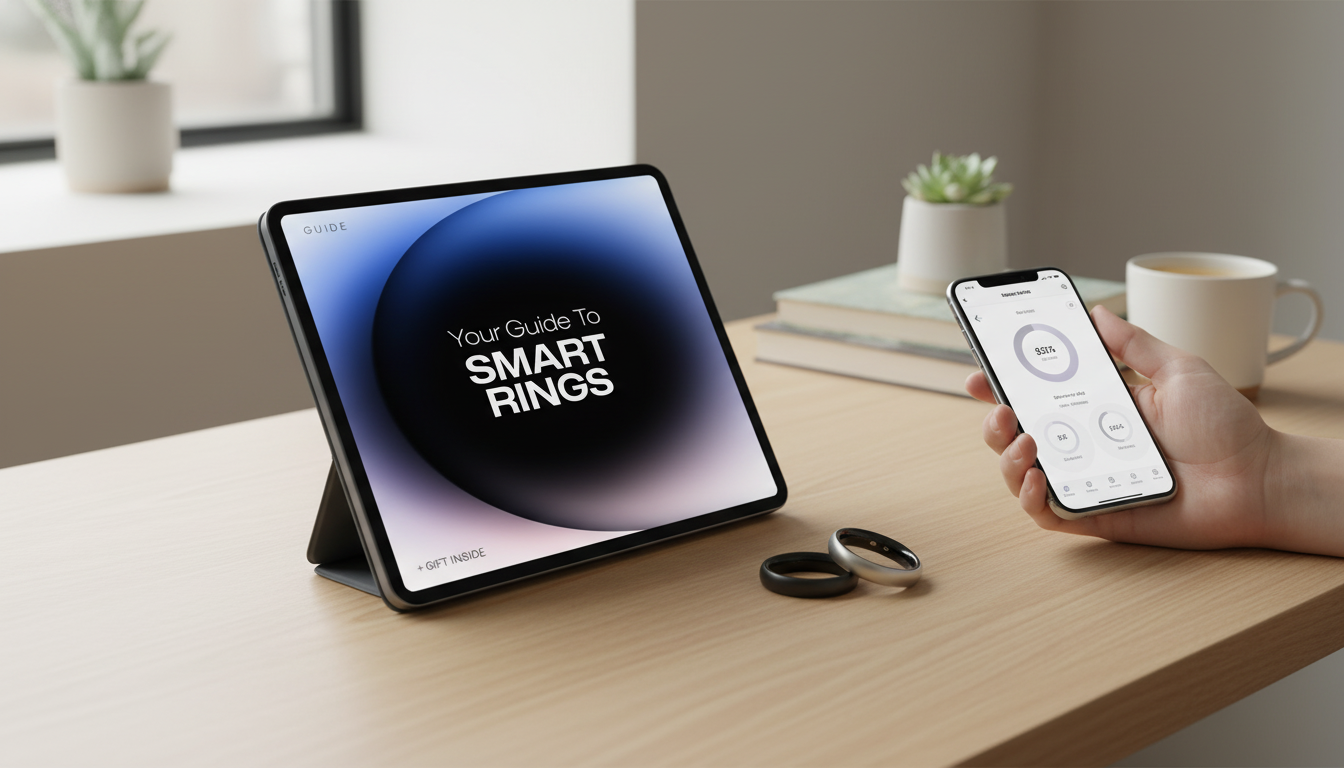
Your Guide to Smart Rings: How to Choose the Perfect Smart Ring for You
Smart rings pack health tracking, convenience features, and subtle style into a tiny wearable. The best choice depends on fit, sensors, app experience, battery life, and what metrics matter most—sleep, recovery, workouts, or everyday wellness. Use this guide to compare features, avoid common pitfalls, and narrow down to a ring that matches lifestyle, comfort preferences, and phone ecosystem.
What a Smart Ring Can (and Can’t) Do
Most smart rings excel at “quiet tracking”: they’re comfortable enough for 24/7 wear, easy to sleep in, and typically offer longer battery life than many smartwatches. Because they’re small, they usually prioritize passive data collection over on-screen interactions.
Common sensors include optical heart rate (PPG), skin temperature trend sensors, and motion sensors (accelerometer/gyroscope). Some models also estimate blood oxygen (SpO2). These signals are converted into outputs like sleep duration and stage estimates, resting heart rate trends, heart rate variability (HRV) trends, readiness/recovery scores, and basic activity/step estimates.
Limitations are worth planning around: calories burned can be a rough estimate, workout analytics may be less detailed than a chest strap or advanced watch, and fast movement (intervals, heavy lifting) can reduce heart rate accuracy. Also, most smart rings are designed for wellness trend insights, not medical diagnosis—unless a specific feature is explicitly cleared for a clinical use. For more on how digital health tools are regulated, see the U.S. Food & Drug Administration (FDA) — Digital Health.
Start With Your Primary Goal
Smart ring comparisons get overwhelming fast. A cleaner approach is to pick a primary goal (and one runner-up), then choose features that directly support those outcomes.
Goal-to-Feature Match for Smart Rings
| Primary goal | Features to prioritize | Nice-to-have | Watch-outs |
|---|---|---|---|
| Better sleep insights | Comfort, sleep scoring, nighttime HR/HRV trends | Smart alarm, sleep coaching | Bulkier designs that snag bedding; unclear sleep-stage methodology |
| Recovery and stress trends | Resting HR + HRV trends, temperature trends, clear readiness score factors | Tagging habits (alcohol, late meals) for correlation | Scores that feel opaque; limited data export |
| Workout support | Workout modes, higher HR sampling during exercise, activity auto-detection | GPS via phone, training load estimates | Inaccurate HR during interval training; weak strength training support |
| Everyday wear and longevity | Battery life, durable materials, water resistance rating | Fast charging, replaceable sizing kits | Scratches on soft finishes; poor warranty terms |
If sleep is the priority, comfort and stable overnight tracking matter more than flashy features. For recovery and stress, prioritize consistent resting metrics (HR/HRV) and transparency about what drives “readiness.” If workouts matter most, confirm the workout modes you use, heart rate sampling during exercise, and how easy it is to edit detected activities. For daily convenience, verify what works in your phone ecosystem (and whether features differ on iOS vs. Android).
Fit, Comfort, and Sizing: The Make-or-Break Factor
Sizing for a smart ring is not the same as sizing a fashion ring. Sensors need consistent skin contact—snug enough to avoid gaps, but not so tight that it restricts circulation or becomes uncomfortable overnight.
Plan for finger swelling. Heat, workouts, hydration, and sleep can change finger size; seasonal shifts can too. Many people find an index or middle finger provides a stable platform, but hand dominance and daily tasks matter. Ring width and thickness also change “feel”: a wider band can be stable for sensors, yet it may interfere with grip on weights, tools, or climbing holds.
Before committing, do practical checks: typing comfort, glove compatibility (work gloves, winter gloves, cycling gloves), and whether the ring rotates during sleep. Rotation can reduce sensor consistency and lead to noisier readings.
Sensors and Metrics That Matter Most
Smart rings often present polished scores (sleep, readiness, stress), but it helps to understand the underlying signals so you can judge value across brands.
For general wellness context, reliable sleep and activity habits still matter most; the NIH MedlinePlus — Sleep and CDC — Physical Activity resources are helpful for grounding goals in evidence-based recommendations.
Battery Life, Charging, and Real-World Reliability
App Experience, Compatibility, and Privacy
Decision Checklist: Narrowing to the Right Ring
Recommended Next Step: A Complete Smart Ring Buying Guide
For a step-by-step framework and quick-reference decision tools, consider Your Guide to Smart Rings: How to Choose the Perfect Smart Ring for You.
If you like simple habit checklists that pair well with fitness routines, Odor-Free Shoes Checklist | Easy Guide on How to Remove Odor from Shoes Naturally | Printable Shoe Care Checklist is a practical add-on for keeping everyday gear fresh.
FAQ
Are smart rings accurate for heart rate and sleep tracking?
Accuracy varies by brand, fit, skin contact, and motion. Many rings perform well for resting heart rate and sleep trend tracking, while high-intensity workouts can be less reliable. The most useful approach is watching long-term trends rather than relying on a single reading.
Do smart rings work without a subscription?
Some rings provide basic metrics without ongoing fees, while others reserve advanced insights and reports for a subscription. Before buying, check what’s available for free and estimate total cost over 1–2 years based on how long you plan to use the ring.
Which finger should a smart ring be worn on?
The index or middle finger often provides a stable fit and consistent sensor contact, but comfort and daily tasks come first. Follow the manufacturer’s guidance when possible, and use a sizing kit or exchange policy to dial in the best fit.









Leave a comment