Motivate Your Team Fast: 14 Simple Manager Moves

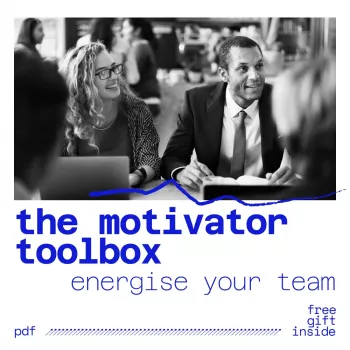
The Motivator’s Toolbox: 14 Simple Moves to Energize Your Team Today (Manager Checklist)
Motivation rarely comes from one big speech. It’s usually the steady, repeatable moves a manager makes every day: clarity, recognition, autonomy, and follow-through. This checklist-style guide breaks motivation into practical actions you can apply immediately—whether the team is remote, hybrid, or in-office—and helps you spot what’s draining energy before it becomes disengagement.
What changes employee motivation (and what doesn’t)
Motivation rises when expectations are clear, progress is visible, and effort is recognized. It drops when priorities shift without explanation, feedback goes missing, or work starts to feel pointless. Perks can help briefly, but day-to-day leadership habits are what sustain energy long-term.
Different employees respond to different motivators—some want autonomy, others want coaching, others want stability. The non-negotiable is fairness: consistent standards, predictable follow-through, and a sense that effort leads somewhere. These basics align closely with research on autonomy, competence, and relatedness in Self-Determination Theory, and with ongoing workplace findings reported by Gallup.
Quick signals: what to watch this week
| Signal | What it may mean | First move to try |
|---|---|---|
| Missed deadlines or “quiet slipping” | Priorities unclear or workload unrealistic | Reset top 3 priorities and remove one nonessential task |
| Low participation in meetings | Psychological safety or relevance is low | Ask for input in writing first; then invite one person at a time |
| Great output but low energy | Burnout risk | Add recovery time and adjust scope; recognize effort publicly |
| High rework | Expectations not defined | Add a “done looks like” checklist before work starts |
The 14 simple moves (pick 3 to start today)
These are meant to be small enough to do immediately, but meaningful enough to change the week. Pick three, run them for five workdays, then keep what moves the needle.
Clarity moves (reduce confusion fast)
- Set a “today’s win”: define one outcome that makes the day successful.
- Clarify “why this matters”: connect the task to customer impact, risk reduction, or team goals.
- Use a one-sentence definition of done: remove guesswork and reduce rework.
- Create small milestones: make progress measurable within 24–72 hours.
Support moves (make progress easier)
- Ask a better check-in: replace “How’s it going?” with “What’s stuck and what would help?”
- Remove one blocker daily: make obstacle removal a visible management habit.
- Protect focus time: reduce meeting load and set response-time norms.
- Coach with options: offer two paths and ask which the employee prefers (and why).
Recognition and ownership moves (build momentum)
- Recognize effort and impact: name the behavior and the result, not just “good job.”
- Give autonomy with boundaries: state the goal, constraints, and decision rights.
- Match work to strengths: align at least one key task with what each person does best.
- Use fair, frequent feedback: short, specific, and tied to observable behavior.
- Build peer recognition: prompt teammates to thank each other for concrete contributions.
- Close the loop: report back on suggestions, decisions, and what changed as a result.
If you want a ready-to-run format (especially during busy weeks), The Motivator’s Toolbox: 14 Simple Moves to Energize Your Team Today – How to Motivate Your Employees as a Manager Checklist turns these actions into a printable, repeatable routine.
Manager checklist for the next 7 days
One week is enough to rebuild traction: clarify priorities, remove friction, and create visible progress. Use the sequence below as a lightweight reset.
One-week checklist (printable structure)
| Action | Owner | When | Done |
|---|---|---|---|
| Set top 3 priorities and share them | Manager | Mon | ☐ |
| Remove one blocker (log it) | Manager | Tue | ☐ |
| Give specific recognition | Manager | Wed | ☐ |
| Coaching: agree next step and deadline | Manager + employee | Thu | ☐ |
| Reduce rework with a definition-of-done step | Manager + team | Fri | ☐ |
| Cancel/shorten a meeting; add agenda | Manager | Any day | ☐ |
| Collect one improvement idea; close the loop | Manager | Sun | ☐ |
Common motivation problems and fast fixes
Recognition matters most when it’s specific and tied to observable impact—guidance echoed in practical leadership advice from Harvard Business Review’s motivation coverage.
When motivation tools aren’t enough
Checklist resource: The Motivator’s Toolbox
A checklist works because it turns “be more motivating” into actions you can repeat under pressure. The Motivator’s Toolbox: 14 Simple Moves to Energize Your Team Today – How to Motivate Your Employees as a Manager Checklist is designed for quick implementation: choose a few moves, track what changes, and repeat what works.
If your team also benefits from tight, print-and-use routines outside of people leadership, the Odor-Free Shoes Checklist | Easy Guide on How to Remove Odor from Shoes Naturally | Printable Shoe Care Checklist is another example of a simple checklist format that helps busy people stay consistent.
FAQ
What are the most effective ways to motivate employees as a manager?
Focus on clarity of priorities, autonomy with boundaries, frequent specific recognition, consistent blocker removal, and visible progress through short milestones. These habits make effort feel meaningful and attainable.
How do you motivate employees who seem disengaged?
Start with diagnosis: unclear expectations, lack of feedback, burnout, role fit, or low trust. Reset priorities, create a short-term win, and close the loop on support so the employee sees what changed.
How often should a manager give recognition or feedback?
Aim for small, specific feedback weekly (more often when someone is learning a new task), with recognition clearly tied to impact. Balance private coaching with occasional public appreciation to reinforce team norms.










Leave a comment