Overcrowded Plants Checklist: Signs, Fixes & Repot Tips
Spotting and Fixing Overcrowded Plants: A Practical Checklist for Healthier Growth
Overcrowding is a quiet stressor that slows growth, invites pests, and makes watering unpredictable. When plants compete for the same light, airflow, and root space, they often look “fussy” no matter how carefully they’re watered or fed. Use the checklist below to confirm when plants are competing for space, then choose the least-disruptive fix—pruning, thinning, repotting, or dividing—to restore airflow, light access, and strong root development.
What “Overcrowded” Really Means (Above Soil vs. Below Soil)
Above-soil crowding happens when leaves overlap heavily, stems stretch toward brighter spots, and airflow drops. The plant’s interior (and lower leaves) gets weaker because it’s shaded and stays damp longer after watering.
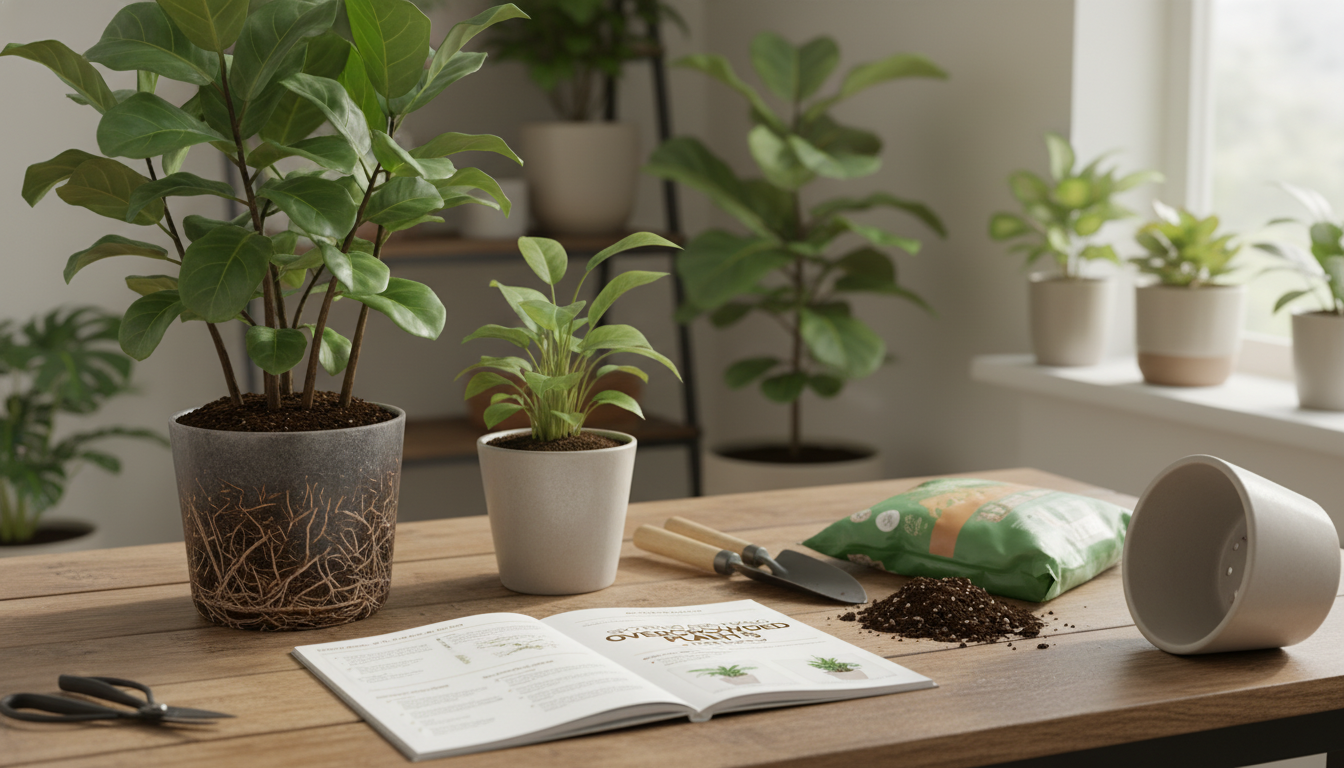
Below-soil crowding is about root real estate. Roots may circle the pot, form a dense mat, or even push soil upward. Water behavior becomes erratic: it can run through too fast (roots displacing soil) or linger wet in pockets (compacted, airless zones).
Why it matters: crowding increases competition for light, water, and nutrients while raising humidity around foliage—an easy setup for mildew, leaf spot, and recurring fungus gnats.
Plants most affected: fast growers, trailing plants kept in small pots, clump-forming houseplants, seedlings, and tightly spaced garden beds.
Quick Checklist: Signs a Plant Is Overcrowded
- Leaves: frequent yellowing of lower/inner leaves, smaller new leaves, or leaf drop inside the canopy.
- Stems: leaning, flopping, or “leggy” stretching toward windows or grow lights.
- Watering: soil dries unusually fast (root mass dominating the pot) or stays wet in the center (compacted roots and low airflow).
- Roots: visible at drainage holes, circling at the soil surface, or the plant lifts out as a tight root “plug.”
- Pests/disease: recurring fungus gnats, powdery mildew, or leaf spot from trapped humidity and poor air movement.
- Growth pattern: stalled growth even during the active season, despite correct light and feeding.
Overcrowding Clues and What They Usually Point To
| Clue | Most likely cause | Best first move |
|---|---|---|
| Roots coming out of drainage holes | Rootbound pot | Repot 1–2 sizes up or root-prune + fresh mix |
| Leggy stems and sparse leaves | Canopy shading/competition for light | Thin/prune + increase light exposure |
| Yellowing inner leaves + musty smell | Low airflow, humidity trapped | Selective thinning + spacing + improve ventilation |
| Water runs straight through quickly | Soil displaced by roots; hydrophobic mix | Repot; soak thoroughly once; refresh potting mix |
| Repeated mildew on leaves | Crowded foliage staying damp | Thin canopy; water at soil line; increase airflow |
Confirm the Diagnosis in 3 Minutes (No Guesswork)
- Light test: check whether top leaves block light from reaching the center or lower stems for most of the day.
- Finger/skim test: feel the top 1–2 inches of soil; note whether it crusts, compacts, or pulls away from the pot edge.
- Tilt-and-slide test: gently slide the plant from its pot to inspect roots; look for circling, matting, or minimal visible soil.
- Spacing check (garden/seedlings): measure plant-to-plant distance and compare with the mature width listed on the tag or seed packet.
- Rule of thumb: if more than one-third of the pot volume appears to be roots (with little soil visible), the plant is likely overdue for space.
For broader plant problem references (especially when symptoms overlap), the Royal Horticultural Society’s advice library and NC State Extension houseplant resources are reliable starting points.
Choose the Right Fix: Prune, Thin, Divide, or Repot
- Prune (least disruptive): best when the canopy is dense but roots still have room. Remove crossing stems and congested inner growth to reopen airflow lanes.
- Thin (seedlings or crowded stems): remove weaker individuals at the soil line so the strongest plants get space. Avoid yanking seedlings that can disturb neighbors’ roots.
- Divide (clump-formers): ideal for plants that naturally multiply (many ferns, grasses, peace-lily-type clumps). Split into smaller sections with roots attached, then pot up.
- Repot (rootbound plants): move up 1–2 inches in pot diameter. Jumping to an oversized pot can keep soil wet too long and increase rot risk.
- Root-prune + refresh (when pot size must stay the same): trim circling roots, loosen the outer root layer, replace old mix, and replant at the same depth.
Step-by-Step: Repotting Without Setbacks
Step-by-Step: Thinning and Spacing for Seedlings and Garden Beds
For spacing fundamentals in outdoor beds, local guidance from extension offices can help match plant labels to real conditions; the University of Maryland Extension is a solid example of research-based home garden information.
Prevent Overcrowding from Coming Back
Printable Checklist for Ongoing Plant Triage
Recommended Guides (Digital Downloads)
- Spotting and Fixing Overcrowded Plants Checklist | Easy Plant Care Guide | Identify Overcrowded Plants Signs & Restore Healthy Growth
- Odor-Free Shoes Checklist | Easy Guide on How to Remove Odor from Shoes Naturally | Printable Shoe Care Checklist
FAQ
How do you know if a plant is rootbound or just thirsty?
Rootbound plants often seem thirsty because they dry quickly, but sliding the plant out of the pot reveals circling/matted roots and very little visible soil. If roots dominate the container and water runs through fast, lack of space—not just low moisture—is usually the driver.
Should you repot immediately after buying a crowded plant?
If roots are emerging from drainage holes or tightly circling the pot, repot soon to prevent rapid decline. If it’s only mildly crowded, a short acclimation period in stable light and temperature can reduce shock before repotting during active growth.
Can overcrowding cause yellow leaves even with proper watering?
Yes. Crowding can reduce light inside the canopy and trap humidity, while root competition limits nutrient uptake even when watering is consistent. Thinning or repotting often steadies leaf color once airflow and root space improve.










Leave a comment