Smart Cleaning for Mental Health: 10–20 Minute Calm
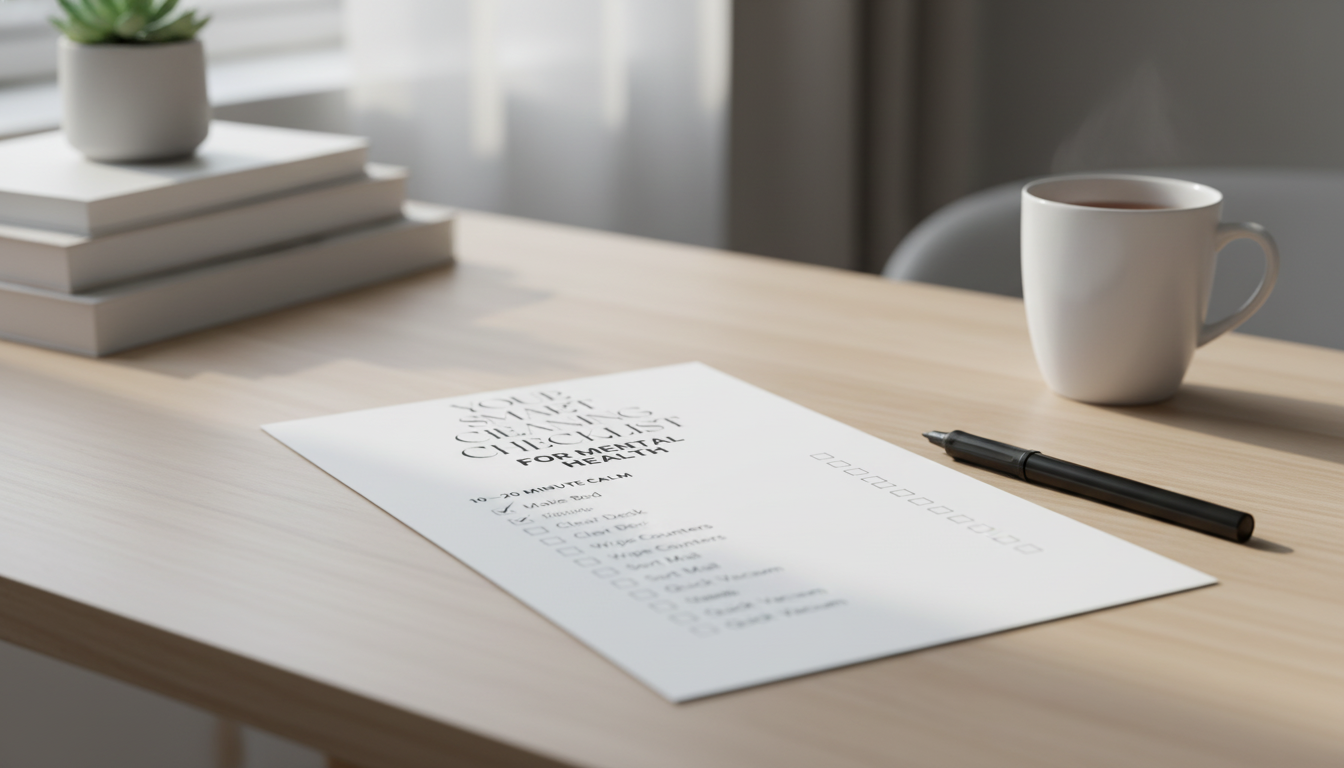
Smart Cleaning for Mental Health: A Gentle Checklist for Calm, Organized Spaces
A tidy environment can reduce visual overload and make daily routines feel more manageable—especially during stressful weeks. Smart cleaning keeps the goal simple: create comfort and function with small steps you can repeat. Instead of chasing perfection, you’ll use realistic time blocks, a few core supplies, and a printable checklist that supports consistency without turning your home into another source of pressure.
Why “smart cleaning” feels different than deep cleaning
Deep cleaning can be satisfying, but it often demands planning, energy, and time you may not have. Smart cleaning is designed for real life—especially when your attention and motivation come and go.
- Reduces friction: fewer decisions, fewer supplies, smaller task sizes.
- Prioritizes high-impact areas first: surfaces, floors, dishes, and laundry “reset points.”
- Uses time-boxing: short sessions help prevent spiraling into all-day cleaning.
- Supports overall care: it can work alongside therapy, medication, rest, and routines (not as a replacement for professional help).
When stress is high, the environment can feel louder than it is. Even a quick reset—like clearing the sink or making a walkway—can reduce daily friction and make the next step easier. For general stress education and coping tools, the CDC’s stress coping guide and the American Psychological Association’s overview of stress effects are helpful references.
What’s inside the printable checklist (and how to use it)
A good checklist shouldn’t feel like a scoreboard. It should feel like a menu. The goal is to make “what do I do next?” easier to answer.
- Daily micro-tasks: 2–10 minute resets that keep mess from compounding.
- Weekly rotation: a simple plan that covers key rooms without doing everything at once.
- Monthly anchors: occasional tasks that improve comfort (bedding, fridge check, dusting hot spots).
- Mindful prompts: short reminders to pause, breathe, and choose “good enough.”
- Flexible design: circle priorities, skip tasks without guilt, and restart any day.
If you want a ready-to-use version with gentle prompts and an easy structure, see the Smart Cleaning Checklist for Mental Health (Printable Digital Download).
Set up a calm cleaning session in 5 minutes
Starting is often the hardest part. This setup is built to lower the barrier so you can begin even when you don’t feel “ready.”
- Pick a timer length: 10, 15, or 20 minutes; stop when it ends.
- Choose one “home base” basket: quickly gather items that belong elsewhere (no sorting yet).
- Use a 3-supplies rule: all-purpose cleaner, microfiber cloth/paper towels, trash bag.
- Lower the barrier: shoes on, music on, windows cracked—whatever helps you start.
- Define a finish line: one room, one surface, or one category (trash, dishes, laundry).
Optional add-on: if entryway clutter (including shoes) becomes a daily snag, a small routine helps. Pair your quick pickup with the Odor-Free Shoes Checklist (Printable Shoe Care Checklist) to keep your “drop zone” fresher with minimal effort.
A simple weekly rhythm that supports mental well-being
Smart cleaning aims for “baseline clean” most weeks: clear-ish counters, a manageable sink, and walkable floors. You’re not trying to keep every room guest-ready. You’re keeping your space supportive.
- Pair tasks with routines: after coffee, after work, before a shower.
- Reserve energy: schedule one lighter day to avoid burnout.
- Use guardrails both ways: the checklist can prevent over-cleaning on high-energy days and shutdown on low-energy days.
| Day | 10–20 Minute Focus | Minimum Version (Low-Energy Option) |
|---|---|---|
| Mon | Trash + quick pickup | Collect trash only |
| Tue | Kitchen reset | Clear one counter + run dishwasher |
| Wed | Bathroom refresh | Wipe sink + swap hand towel |
| Thu | Floors hotspot | Sweep/vacuum main path only |
| Fri | Laundry loop | Start one load or fold for 10 minutes |
| Sat | Room rotation | One surface: desk/nightstand/coffee table |
| Sun | Gentle reset | Choose 1 task; plan next week |
Room-by-room checklist: what matters most
If you can only do a little, target the areas that affect comfort, hygiene, and your ability to start the next day.
- Kitchen: dishes, sink clear, counters wiped, trash out (food-related tasks first).
- Bathroom: sink and toilet quick wipe, fresh towel, empty bin; restock basics if low.
- Bedroom: clear sleep space (nightstand, floor path), change sheets when possible; laundry in one hamper.
- Living area: remove cups/plates, fold blankets, clear one surface to reduce visual clutter.
- Entryway: shoes and bags contained; a small “drop zone” prevents daily pileups.
Mindful cleaning techniques for stress relief
Mindful cleaning isn’t about making chores magical. It’s about reducing mental noise while you do something small and concrete.
When motivation is low: a rescue plan
Make the checklist fit real life (printable + digital)
Printable download: quick details
Get the printable here: Your Smart Cleaning Checklist for Mental Health.
FAQ
How long should a smart cleaning session last?
Try 10–20 minutes with a timer, and stop when it ends. Consistency matters more than intensity, and on hard days you can use a “minimum version” (like trash only or one counter) and call it done.
What if the checklist makes cleaning feel more overwhelming?
Use only one section at a time, and hide the rest so it feels smaller. Choose 1–3 tasks and treat the checklist as options, not obligations—skipping and restarting are part of the design.
Is mindful cleaning helpful if there’s anxiety or depression?
It can support routines and reduce environmental stressors by making your space calmer and more functional. It isn’t a substitute for professional care, but it can be a gentle tool that complements other supports.










Leave a comment